EN │ ES
Logistics Blog
09/12/2025
Raul Chavez Valdivia Velarde
10 min
It’s the simple truth of modern commerce: consumers love easy returns. They have come to expect it. In fact, for many Direct-to-Consumer (D2C) brands and high-volume retailers, a flexible return policy is no longer a perk—it’s a non-negotiable part of the customer value proposition.
But this convenience comes at a staggering, often-hidden cost.
The average eCommerce return rate has skyrocketed in 2025, now floating somewhere between 17% and 25% for general merchandise, and soaring even higher (up to 40%!) for categories like apparel and footwear. If one in every four orders is coming back, your forward logistics systems are only telling half the story of your overall supply chain.
The financial reality is brutal: processing refunds and managing the subsequent logistics can cost the retailer anywhere from 20% to 39% of the product’s original price. This isn't just a logistical headache; it's a silent, massive drain on profitability that legacy systems built only for forward logistics simply weren't designed to handle.
The traditional approach to returns is fundamentally broken and unsustainable for growth-focused D2C brands.
The goal of a modern, cloud-based platform like Shipedge is to transform this destructive loop into a controlled, profitable process. This is the strategic shift from viewing product returns as a painful necessity to mastering the art of Reverse Logistics Strategy. This is a comprehensive guide to building a better, more profitable returns model.
When an item is returned, the cost of the refund is only the beginning. The real erosion of your margins happens in the black hole of the warehouse floor and the time it takes to get that product back into sellable inventory. This is where inefficient reverse logistics operations truly hurt.
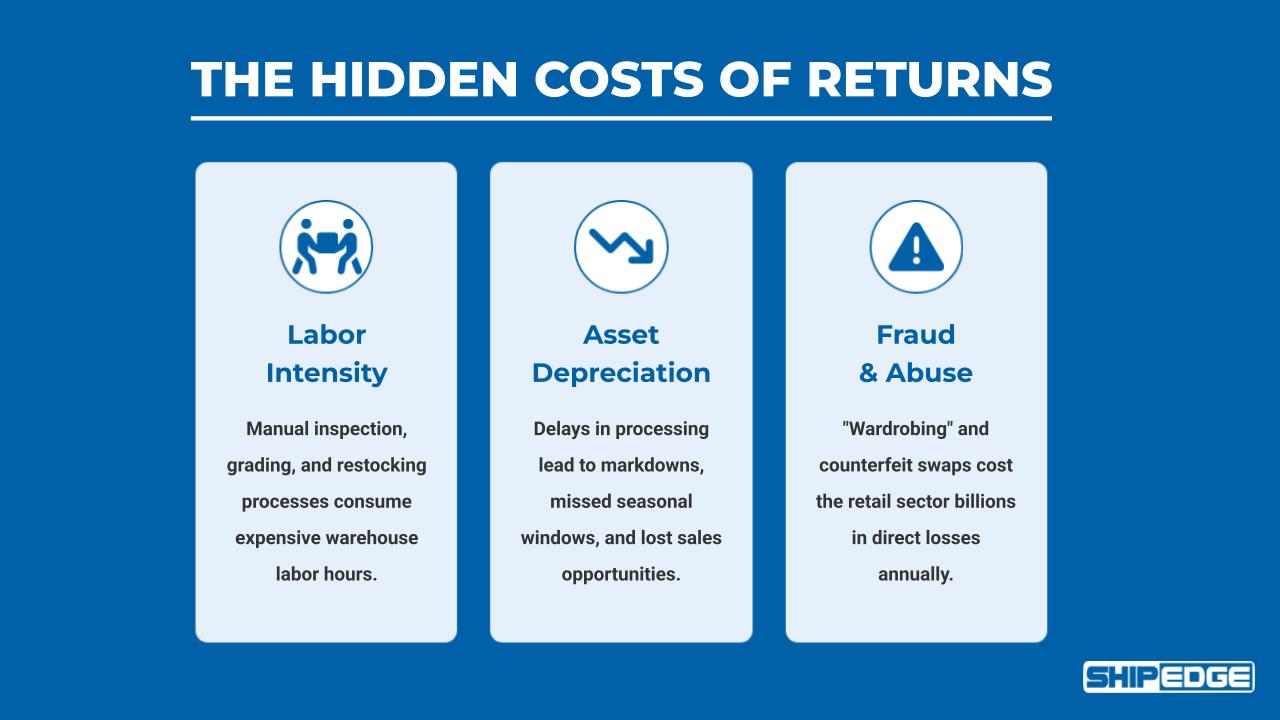
Most retailers track return shipping costs, but the true expense is hidden in the operational friction points that lead to delays and diminished value. The failure of traditional logistics to account for this complex reverse flow is costly:
1. Labor for Inspection and Grading: A worker must physically open the box, check the item’s condition, and decide if it can be resold at full price, refurbished, or scrapped. If this is a manual, paper-based process, it's slow, error-prone, and adds significantly to operational costs.
2. Restocking and Putaway Delay: Every hour a returned item sits on a dock or in a backlog, it is tied-up capital. Real-time stock visibility is lost, leading to missed sales opportunities. If a highly-demanded item is stuck in return limbo, you could be losing a new sale. Excess inventory in the returns management center is a non-starter.
3. Markdown and Liquidation: A significant percentage of returned goods cannot be resold at full price due to minor damage, opened packaging, or the time lag. The difference between the item’s original price and its discounted resale value is a direct loss tied to poor streamlining returns process efficiency.
4. Fraud and Abuse: Issues like "wardrobing" and swapping counterfeit goods are increasingly common, costing the retail sector billions annually. Without a digital, audited process, catching this abuse is nearly impossible in traditional logistics environments.
These friction points collectively create a compounding negative effect, drastically reducing the potential value of every returned unit.
The answer to this problem isn't trying to eliminate returns—it's about controlling them. It's about implementing a Reverse Logistics System that treats the movement of goods back into your system with the same, or greater, rigor as the outgoing shipment.
Shipedge's modular platform integrates the returns process directly into your OMS, WMS, and IMS, establishing a single, highly automated workflow designed to support modern supply chain management.
.jpg)
The primary goal of reverse supply chain processes is speed: minimizing the time between refund initiation and inventory reinstatement. This is a core focus of all key strategies.
This automated intelligence is the core distinction between a costly manual returns system and a high-speed, profitable one.
This rapid processing capability means products are back on your eCommerce channel within hours, not days, safeguarding that crucial real-time stock visibility and preventing lost sales.
Customer service teams often bear the brunt of managing returns, which quickly leads to operational bottlenecks. Automating the Returns Merchandise Authorization (RMA) process is the keystone of an efficient Reverse Logistics Strategy.
Shipedge provides the tools to create a seamless, end-to-end digital returns portal that reduces friction for both the end consumer and the warehouse team:
This end-to-end automation moves the returns authorization from a reactive customer service task to a proactive, rules-based business operation.
.jpg)
One of the most insidious costs in reverse logistics is returns fraud. Shipedge transforms the return center dock into a security checkpoint using its advanced tracking features:
By digitizing this verification process, you build a powerful, automated defense against fraud, protecting your bottom line and ensuring high-value inventory integrity.
These security features are paramount for brands dealing with high-cost goods or those susceptible to rampant serial fraud.
When a product is deemed returnable, the priority shifts from simply accepting it to maximizing its recoverable value. This means moving beyond the basic First-In, First-Out (FIFO) logic and prioritizing operational efficiency and sustainability.
.jpg)
An efficient management reverse logistics process doesn't just restock the item; it grades it accurately and routes it to its highest-value destination.
This data-driven grading eliminates arbitrary decisions, guaranteeing consistency and speed in the asset recovery workflow.
This strategic grading approach ensures that you recover the highest possible percentage of the product’s original value, directly impacting your bottom line.
The final stage of the returns process is managing products that cannot be resold or refurbished. This is a critical area for both cost control and brand reputation.
Reverse Logistics Strategy isn't theoretical; it is actively transforming the profitability of leading companies. Examining real-world logistics examples highlights the significant difference automated returns management makes.
Retail giant Best Buy has successfully integrated its product return and trade-in programs with its service and repair operations (Geek Squad). By implementing a comprehensive reverse logistics system that uses serialized tracking and internal refurbishment centers, Best Buy significantly increased its asset recovery rate. This strategic approach ensures that high-value electronics are quickly assessed, repaired, and resold as open-box or certified pre-owned items, leading to a documented reduction in reverse logistics overhead (Source: RLA data) and boosting their circular economy efforts.
Zappos revolutionized the apparel and footwear retail space by treating the returns process as a core part of its customer service strategy. Their ultra-generous return policy, coupled with an operational commitment to processing refunds the moment the return package is received (or even before), built unparalleled customer loyalty. By prioritizing the speed of the reverse logistics experience and ensuring immediate communication, Zappos achieved a repeat customer rate of over 75% (Source: Zappos Case Studies), proving that investment in fast, friction-free returns drives repeat business.
These successes are powered by the core capabilities within the Shipedge platform: the seamless integration of OMS, WMS, and IMS. Our platform provides the granular control over inventory management (like serial and lot tracking) needed for Best Buy's high-speed grading and the automation required to deliver Zappos-level exceptional customer satisfaction. These key strategies move the entire operation from damage control to profit recovery.
While efficiency saves you money, the ultimate payoff of a well-executed Reverse Logistics Strategy is loyalty. Studies show that 92% of customers will buy again if the returns process is easy. The goal is to make the reverse logistics experience as seamless as the purchase itself, driving repeat business.
.jpg)
The moment a customer’s package is received and processed at your facility is when their frustration or relief is finalized. Shipedge ensures this moment is a positive one for the end consumer through efficient management.
By making the returns management process painless, fast, and transparent, you convert a potential negative experience into a powerful loyalty engine, making the customers more likely to shop with you again.
The days of treating returns as a simple, unavoidable cost of business are over. With eCommerce volumes skyrocketing and consumer expectations for flexibility higher than ever, a robust Reverse Logistics Strategy is no longer optional—it is a mandatory component of a profitable, scalable business model and the modern supply chain.
By implementing a modular, cloud-based platform like Shipedge, you transition from reactive management to proactive automation. You stop the profit leak by:
The Shipedge platform gives you the control and visibility needed for effective supply chain management and to transform your returns management operation from a financial black hole into a powerful driver of customer satisfaction and long-term profit.
Ready to implement a reverse logistics strategy that turns costs into cash flow?

Soluciones de Sistema de Administración de Almacenes (WMS) y Sistema de Administración de Pedidos (OMS)
Comenzar