EN │ ES
Supply Chain
August 31, 2026
Shipedge
15 min read
Article Summary
Supply chain integration connects every system in your operation so data flows automatically — without manual entry, without delays, and without the errors that come from disconnected platforms. This guide covers the most common integration challenges operations teams face, from mismatched data formats and API latency to team adoption. You will also find a prioritized integration roadmap: which connections to build first, which to defer, and which third-party tools can shortcut months of custom development.
In today's fast-paced business environment, mastering your integration supply chain is no longer a luxury — it's a necessity. The rapid evolution of technology and consumer expectations, especially online, has put immense pressure on companies, supply chain managers, operations managers, and logistics professionals to optimize their operations.
But where do you begin? The complexity of supply chain integrations can be overwhelming without a clear roadmap. You need to streamline your processes to stay competitive, reduce costs, and improve customer satisfaction.
Is your supply chain running as efficiently as it could be, or are unseen gaps hindering your full potential?
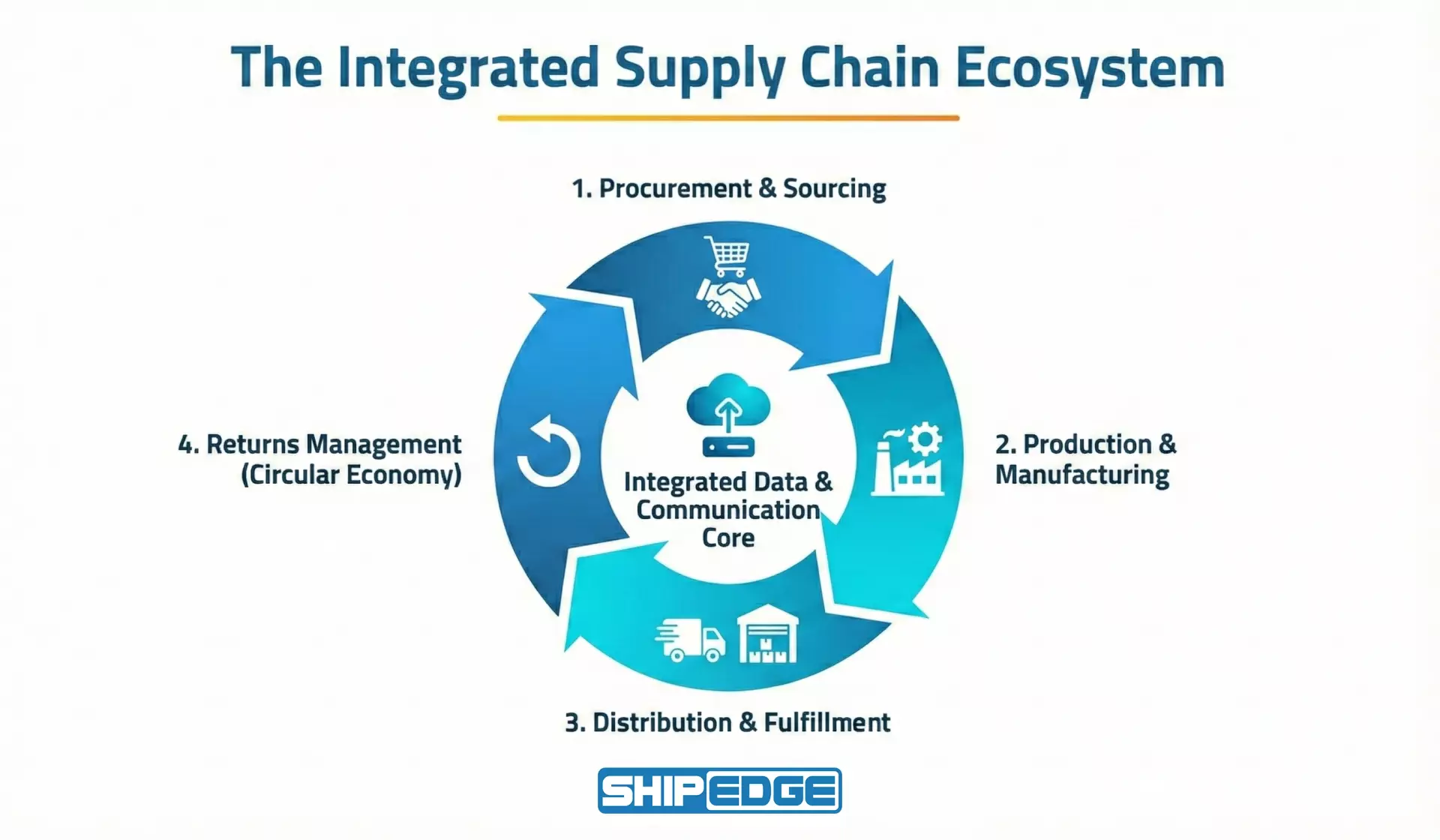
Supply chain integration is like putting together a jigsaw puzzle — each piece represents procurement, production, distribution, and returns management. These components form the backbone of a seamless supply chain integration process. Understanding how they fit together is vital for supply chain managers aiming to build efficient systems.
Procurement involves sourcing and purchasing the raw materials and services, as well as managing the purchasing budget, necessary for production. It's the first step in the integration process and sets the stage for the entire supply chain. Effective procurement requires coordination with suppliers and internal teams to ensure timely delivery and quality control.
Production transforms these materials into finished goods. It's a complex process that demands synchronization with other components and different stakeholders to avoid bottlenecks and delays. Distribution is where your logistics expertise comes into play — getting the product from the factory floor to the customer's doorstep, ensuring flawless fulfillment. Here, information sharing becomes critical, requiring coordination with warehouse staff, transportation providers, and other stakeholders involved in the workflow.
Finally, returns management is often overlooked but plays a significant role in customer satisfaction and sustainability. Efficient handling of returns can transform a potential loss into an opportunity for improvement. By understanding these core components, you can see how they interact and impact each other, enabling a holistic approach that optimizes overall efficiency.
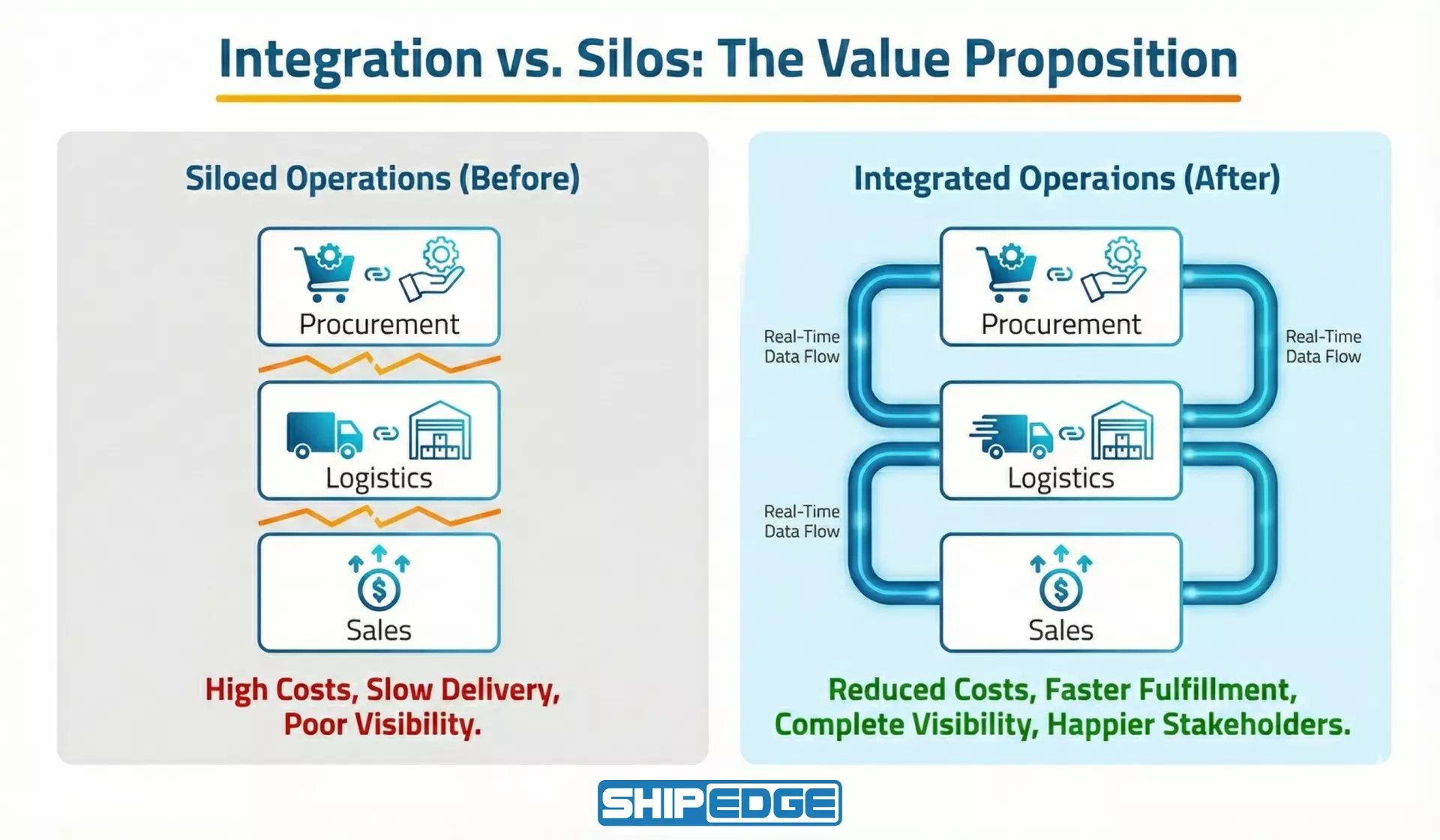
Imagine a world where your operational costs plummet, delivery times speed up, and customer satisfaction soars. That's the reality for businesses that achieve successful and seamless supply chain integration. By streamlining processes, you not only cut costs but also enhance communication and coordination across the entire organization.
When your systems are integrated, you gain visibility into every aspect of your supply chain. This insight is invaluable for making informed decisions — whether it's adjusting inventory levels and safety stock or reallocating resources. It gives you the ability to anticipate and adapt to market fluctuations, providing a meaningful competitive edge for all stakeholders.
An integrated supply chain also means you're better equipped to meet customer demands. Faster delivery times and fewer stockouts lead to happier customers and repeat business. In a world where customer experience can make or break a company, this is a genuine game-changer. Companies with integrated supply chains also enjoy increased flexibility and resilience, prepared to handle sudden demand spikes or unexpected disruptions.
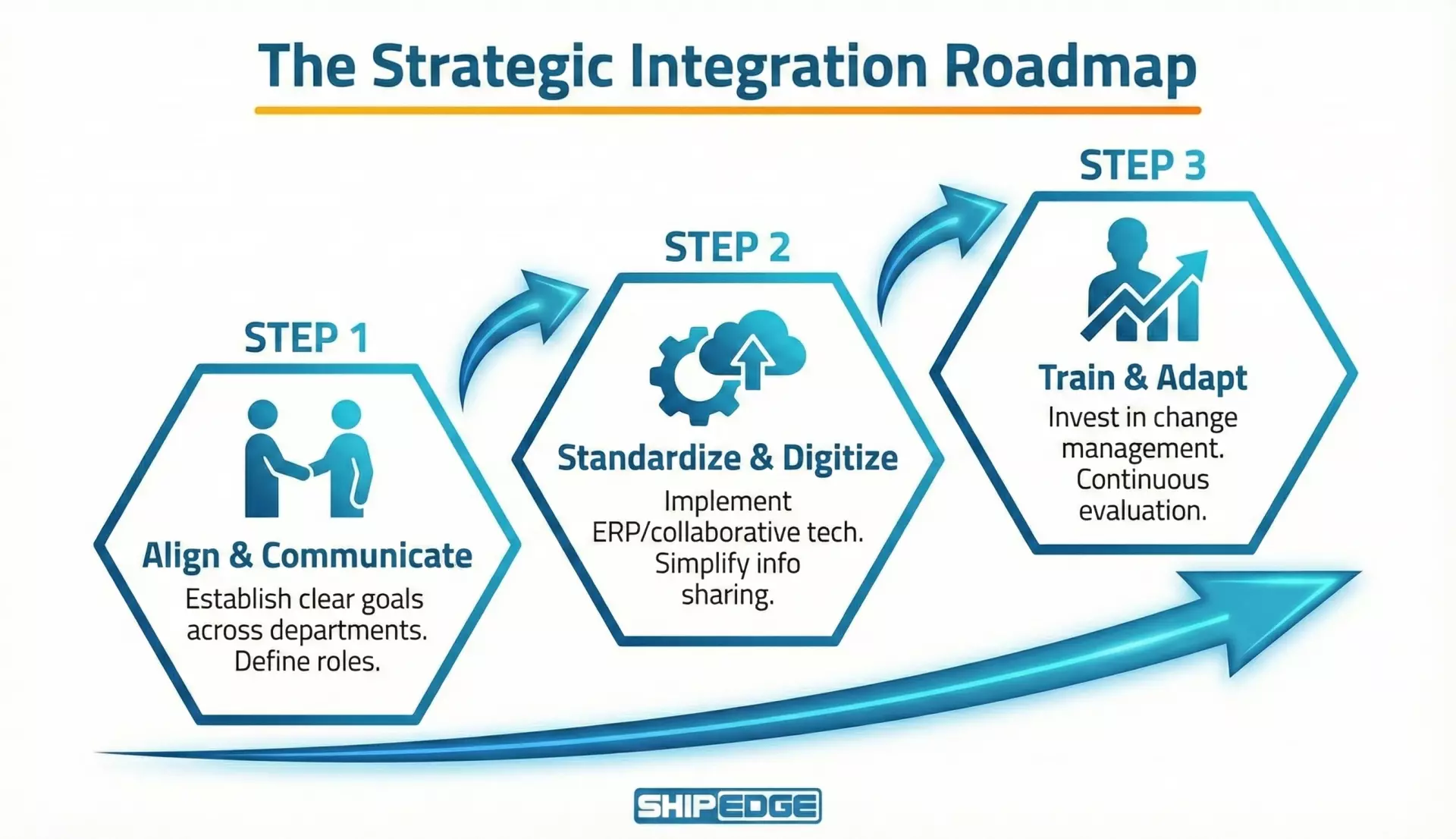
So how do you achieve this coveted integration? It all starts with communication and goal-setting. Supply chain managers must establish clear objectives and communicate them effectively across departments. This alignment ensures everyone is working toward a common goal.
Next, embrace collaborative technologies. Tools like enterprise resource planning (ERP) systems foster teamwork and streamline processes by simplifying information sharing between internal teams and external partners. Standardizing these processes ensures consistency and reduces the complexity of integration efforts.
Regular training and development are equally critical. Keeping your teams aligned with integration goals requires ongoing education and proper change management that helps employees understand their roles within the larger supply chain strategy. Finally, don't underestimate the power of continuous evaluation and adaptation. Regularly assess your integration efforts, identify areas for improvement, and adjust as needed.
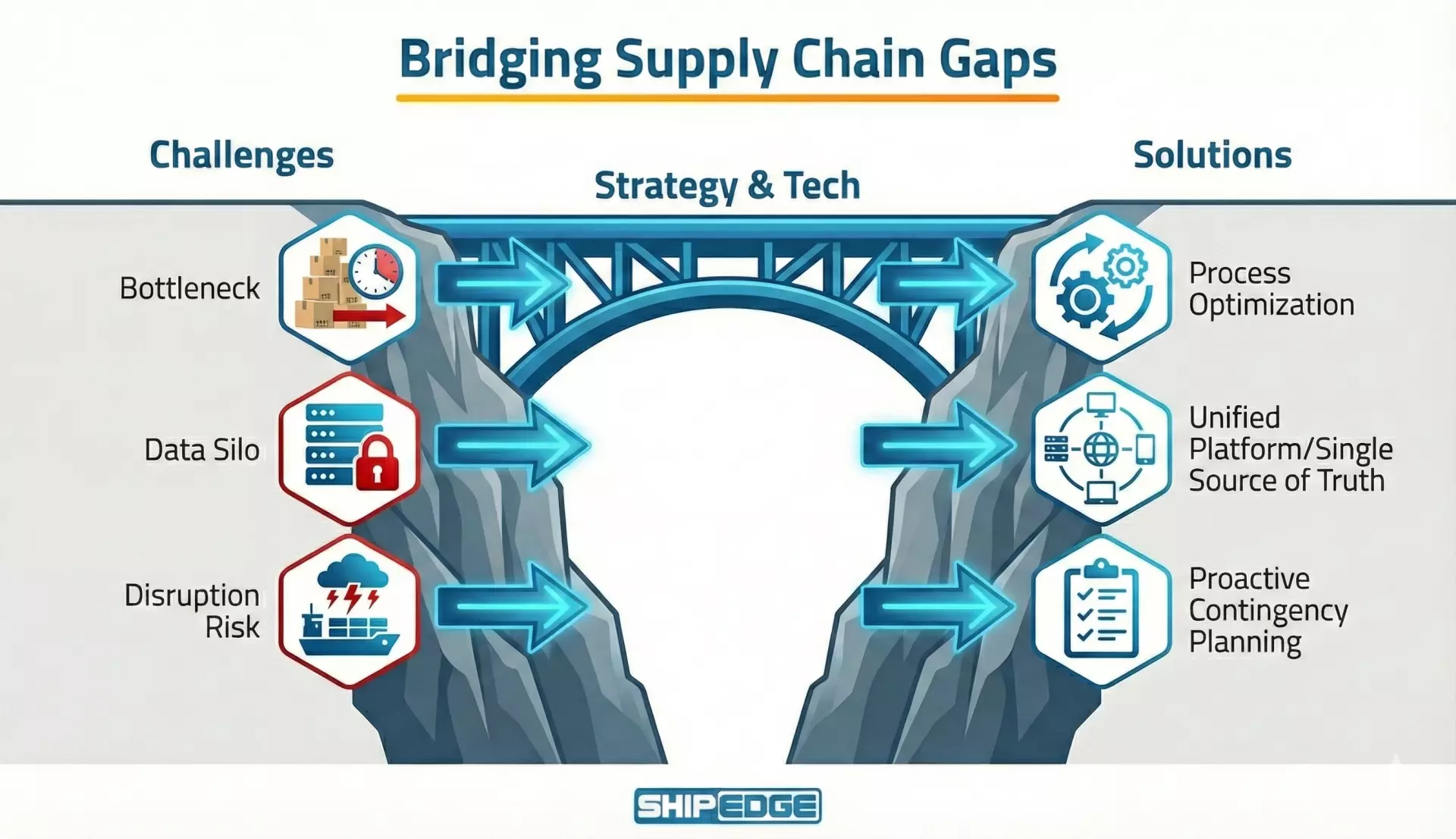
Even the best-laid plans can encounter hurdles. Supply chain managers often face logistical bottlenecks — from transportation delays to warehouse space constraints — that impede efficiency for internal teams and external stakeholders. Identifying the root causes of these issues is the first step toward resolving them.
Communication breakdowns are another common challenge. When information gets lost in translation, delays and increased costs follow. Implementing robust communication tools and protocols can bridge these gaps. Inconsistent data across platforms creates confusion and hinders decision-making. Standardizing data collection and sharing practices provides a single source of truth for all parties involved.
Proactive risk management strategies are essential for minimizing disruptions. Whether it's a natural disaster or a failure from one of your vendors, having contingency plans in place ensures you're prepared for the unexpected. By anticipating potential risks and developing response protocols, you can safeguard your supply chain operations.
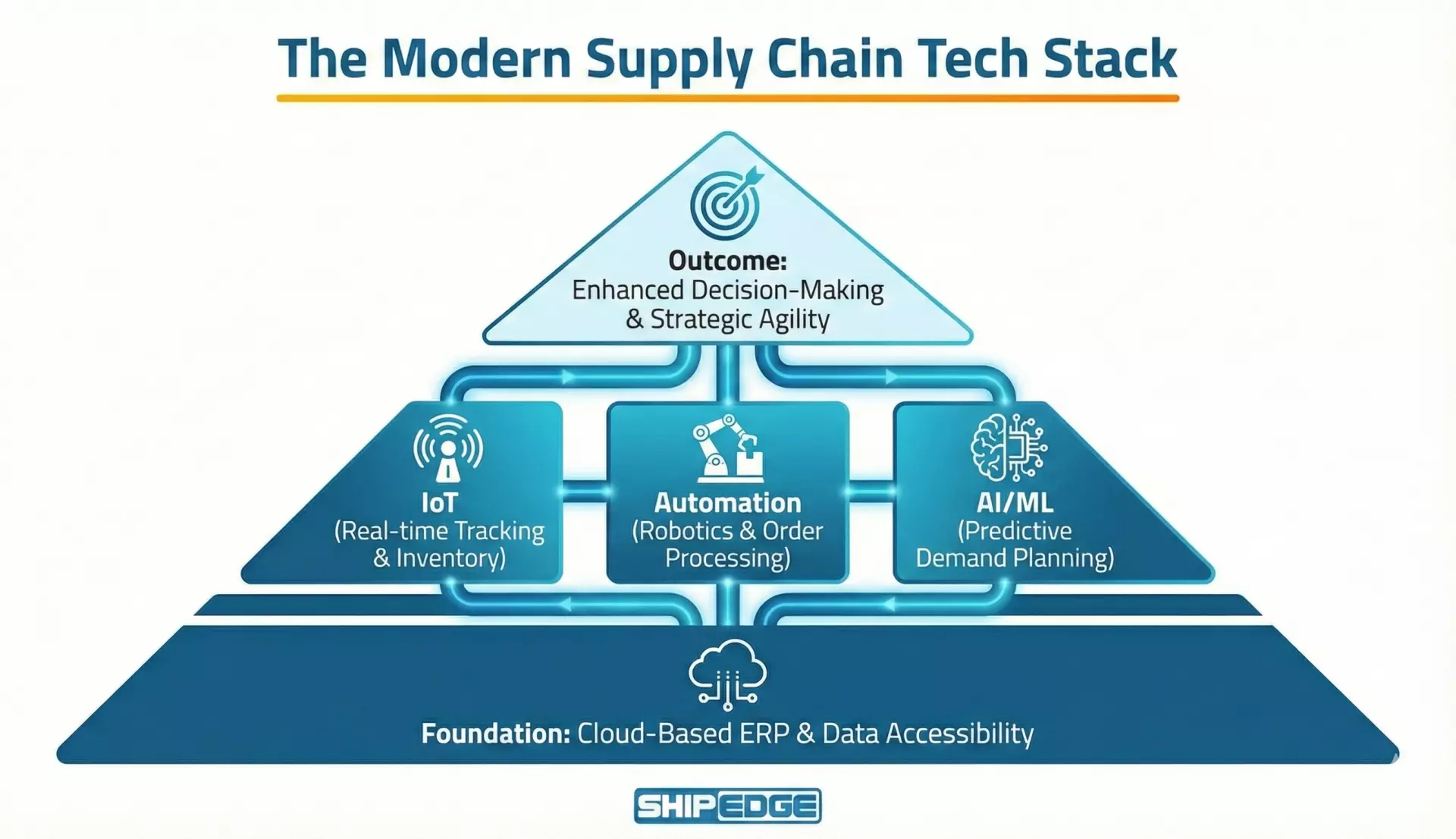
In today's digital age, investing in advanced supply chain technology is your best ally in enhancing supply chain efficiency. Advanced technologies like artificial intelligence (AI) and the Internet of Things (IoT) third party logistics software, offer real-time insights into your operations. AI can predict demand patterns while IoT devices track inventory levels, providing invaluable data for decision-making.
Automation is another game-changer. By automating repetitive tasks, you free up resources for more strategic supply chain planning — from inventory management, rapid fulfillment, and order processing to transportation scheduling. Cloud-based solutions further enhance collaboration and data accessibility, allowing internal teams and partners to access information anytime, from anywhere.
Logistics professionals must stay ahead of the curve by exploring emerging tech trends. Whether it's blockchain for secure transactions or robotics for advanced inventory management, keeping an eye on new technologies ensures you're ready to adapt and innovate.
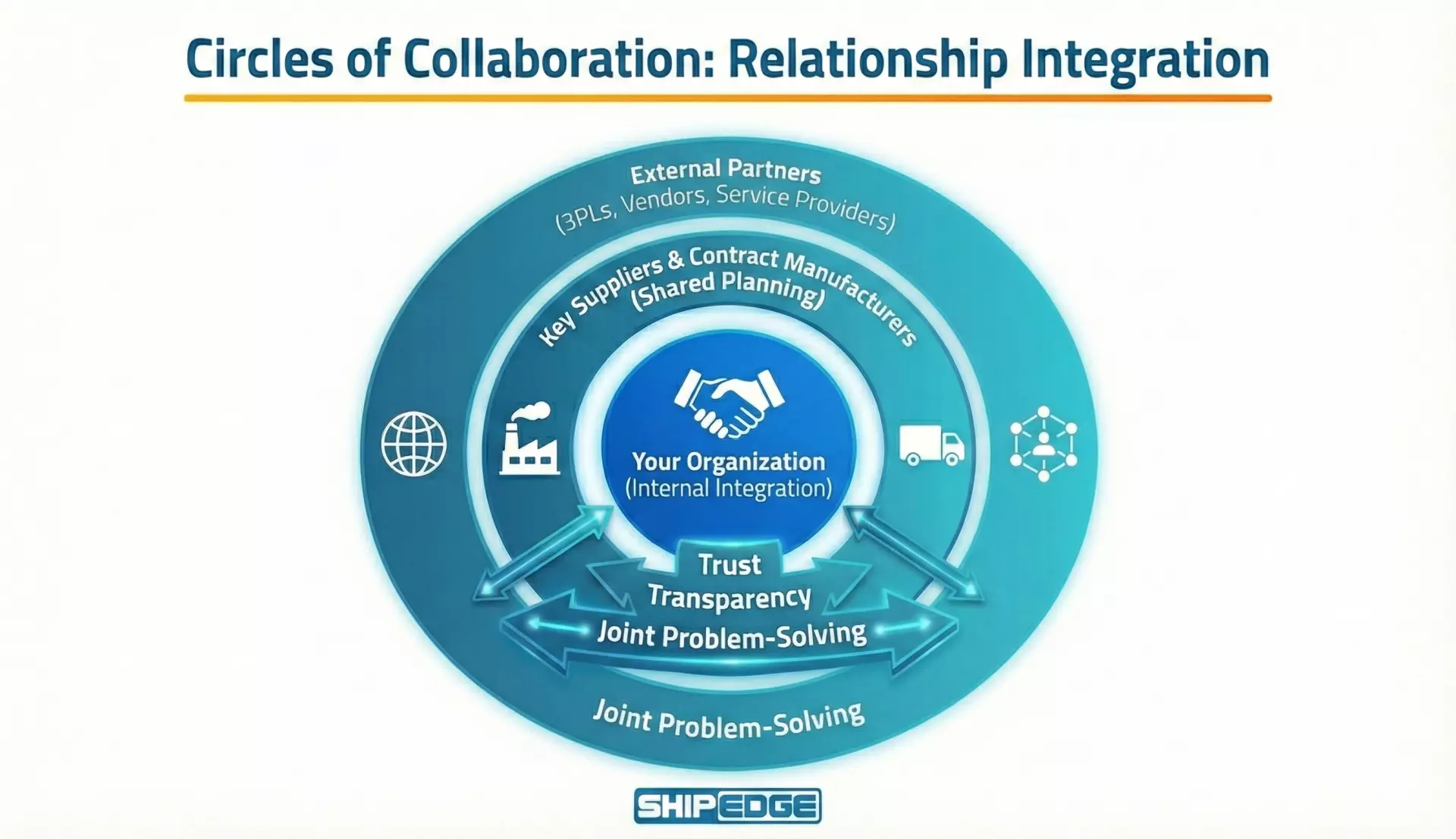
Your partners, such as suppliers, are the lifeblood of your supply chain. Building strong relationships with them ensures a reliable flow of materials and goods. Focusing on relationship integration and working closely with your vendors is just as important. Regular communication with your vendors and suppliers fosters trust and transparency, laying the foundation for successful collaboration.
Research also shows collaborative planning is key to aligning goals and expectations. By involving suppliers and partners in your planning processes, you minimize misunderstandings and enhance cooperation. Partnering with outside vendors enhances problem-solving efforts by providing new viewpoints. Working together on challenges results in better solutions and fosters strong, lasting partnerships.Reviewing every contract carefully ensures alignment from the very beginning.
For business owners, prioritizing relationship-building with suppliers and partners directly enhances overall supply chain performance. By investing time and effort into these partnerships, you create a network of support that drives sustained success.
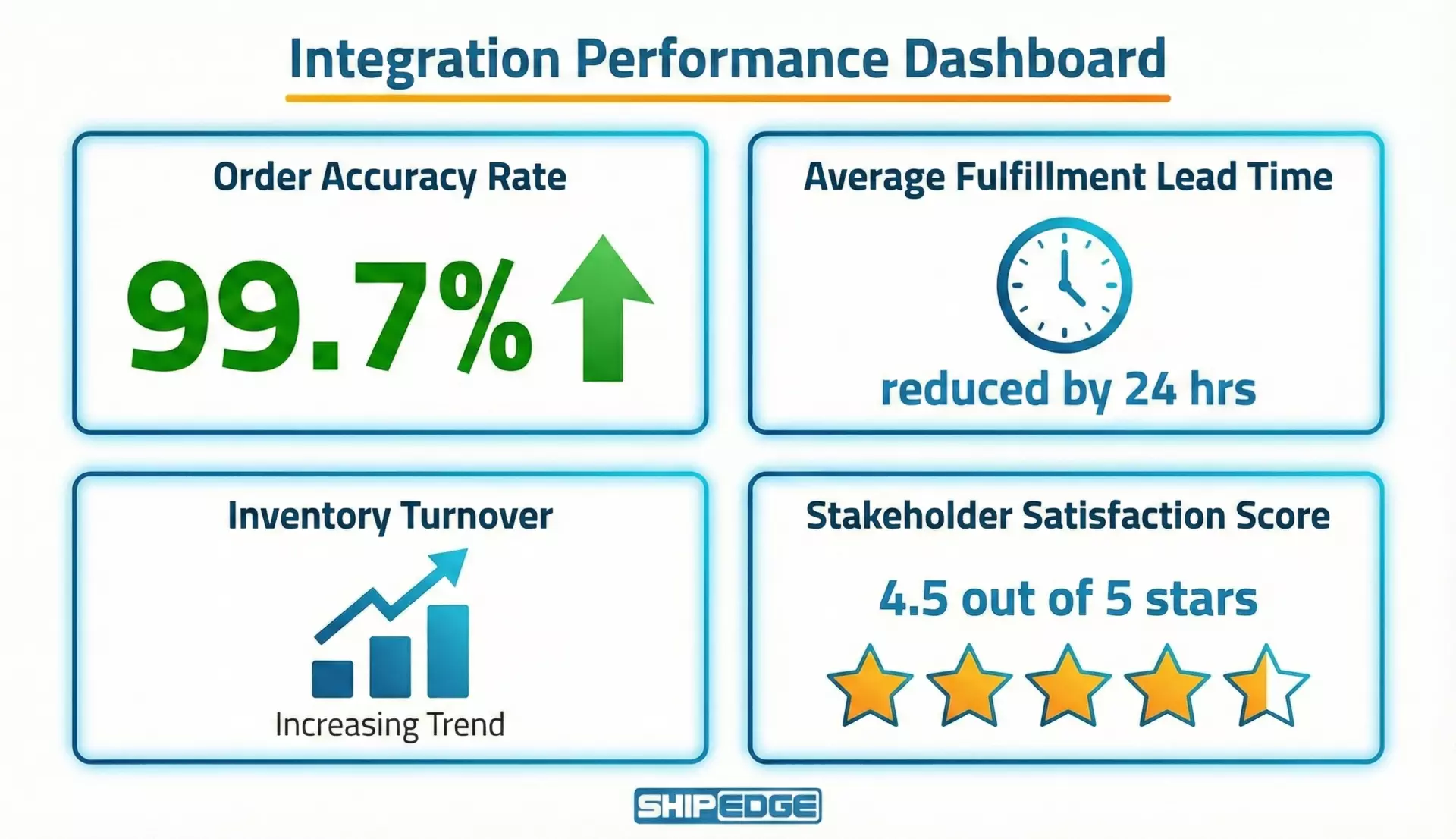
How do you know if your supply chain integration efforts are paying off? Key performance indicators (KPIs) provide valuable insights into your efficiency. Metrics like order accuracy and lead time gauge operational effectiveness and fulfillment speed, helping you identify areas for improvement.
Inventory turnover rates help you assess the balance between supply and demand, ensuring you're neither overstocked nor understocked. Customer satisfaction scores reflect the broader impact of your integration efforts on the end-user — happy customers are a testament to successful supply chain operations that satisfy your stakeholders.
Continuous monitoring of these metrics ensures alignment with your business objectives. Regularly reviewing your performance data allows you to make informed decisions and stay on track toward achieving your integration goals.
Data analytics is a powerful tool for optimizing supply chain operations. It provides actionable insights that drive informed decision-making. By analyzing data, you can identify patterns, trends, and areas for improvement across your entire supply chain.
Predictive analytics takes this further by helping you anticipate market trends and demand fluctuations — knowing what customers want before they do. This foresight allows you to adjust operations accordingly, keeping you one step ahead. Real-time data analysis also enhances your responsiveness to disruptions, enabling quick decision-making when unexpected events occur.
Operations managers leverage data analytics to pinpoint inefficiencies and bottlenecks, implementing targeted solutions that improve overall efficiency and performance.
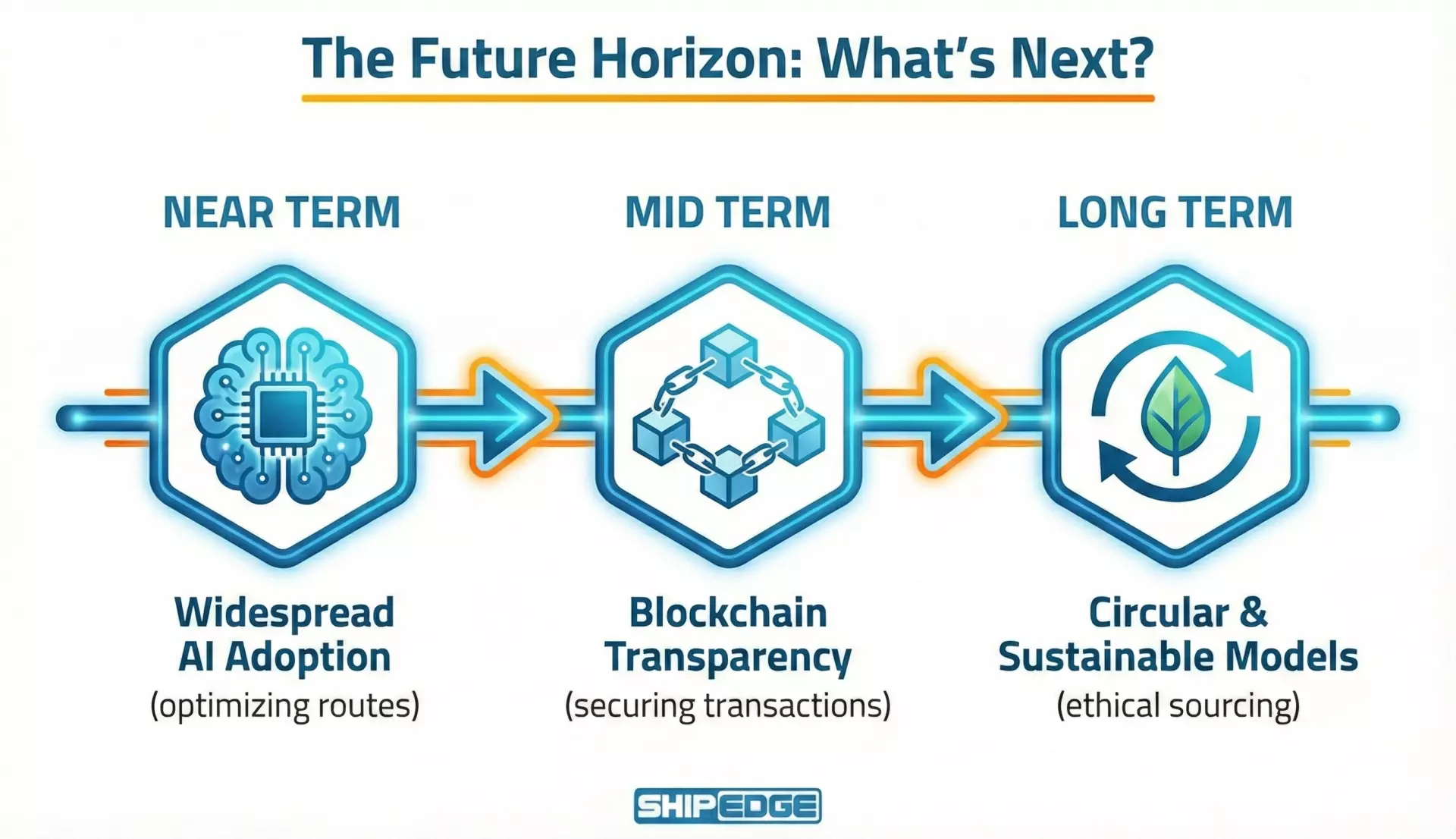
The future of supply chain integration is brimming with exciting possibilities. Expect to see increased adoption of various types of artificial intelligence, which promises to revolutionize everything from demand forecasting to route optimization. Blockchain technology offers greater transparency and security in transactions, providing an immutable record of every step in the supply chain.
Sustainability initiatives will drive significant changes in supply chain practices. As consumers and businesses prioritize environmental responsibility, supply chain managers must adapt — whether by reducing carbon footprints or sourcing ethically. Advanced robotics will also transform inventory management and logistics, with autonomous systems handling warehouse operations with precision and increasing productivity.
Staying informed about these trends helps businesses adapt to evolving market demands. By embracing innovation and flexibility, you're better prepared to thrive in the future landscape of supply chain integration.
Continuous improvement is the key to long-term success in supply chain integration. Regular audits help identify opportunities for process optimization — by evaluating your operations, you can pinpoint inefficiencies and implement targeted solutions.
Encouraging feedback from team members fosters a culture of continuous improvement. Your employees are on the front lines of your supply chain, and their insights provide valuable perspectives on what's working and what needs adjustment. Benchmarking against industry standards gives you perspective on your performance — where you excel and where there's room to grow.
Continuous learning and adaptation are essential for thriving in the ever-evolving world of supply chain integration. By staying open to change and committed to improvement, you ensure your operations remain efficient and effective.
Technology and strategy are only as effective as the people implementing them. Your workforce is one of the most critical — and often underestimated — assets in supply chain integration. Without a skilled, engaged team, even the most sophisticated systems will fall short of their potential.
Investing in comprehensive training programs equips employees with the technical skills and contextual understanding they need to operate effectively within an integrated supply chain. This goes beyond software proficiency. It means helping team members understand how their role connects to the broader operation — how a delay in one department ripples across the entire chain.
67% of customers says empowerment is equally important. When employees feel trusted and equipped to make decisions, they're more responsive, more innovative, and more committed to achieving organizational goals. Creating clear career development pathways, recognizing contributions, and soliciting feedback all contribute to a motivated workforce that drives supply chain excellence. In an era where automation is reshaping roles, organizations that prioritize upskilling and reskilling their people will be far better positioned for long-term success.
For businesses operating across borders, supply chain integration takes on an added layer of complexity. International trade involves navigating a web of regulations, tariffs, customs requirements, and geopolitical considerations that vary by region and can shift with little warning.
Compliance is non-negotiable. Failure to adhere to import and export regulations, product standards, or environmental mandates can result in costly delays, fines, and reputational damage. Building compliance awareness into your supply chain processes — from procurement through distribution — is essential for protecting your business.
Global supply chains also face unique risks: currency fluctuations, political instability, natural disasters, and supplier concentration in volatile regions. Diversifying your supplier base geographically, maintaining strategic safety stock, and developing robust contingency plans can significantly reduce your exposure. With the right systems and partners in place, global complexity becomes a manageable — and even advantageous — element of your supply chain strategy.
Supply chain integrations isn't exclusively the domain of large enterprises. Small and mid-sized businesses stand to gain enormously from even modest integration efforts — and the barriers to entry have never been lower. Cloud-based platforms, SaaS tools, and modular ERP systems have made sophisticated supply chain capabilities accessible at a fraction of the traditional cost.
The key for smaller businesses is to prioritize strategically. Instead of trying to fix everything at once, focus on the areas causing the most inefficiencies such as inventory management, order fulfillment, optimizing secondary fulfillment centers, or communicating with suppliers. Start with those areas first.. A phased approach allows you to demonstrate value, build internal buy-in, and scale your integration efforts incrementally.
Partnering with third-party logistics (3PL) providers is another effective strategy for small businesses looking to punch above their weight. These partnerships provide access to established infrastructure, expertise, and technology without the overhead of building it from scratch. As your business grows, your supply chain capabilities can scale with it.
Today's customers , investors, and regulators are paying closer attention to how products are made and moved — and businesses that ignore environmental and ethical considerations do so at their peril. A truly integrated supply chain is one that aligns operational efficiency with social and environmental responsibility.
The method involves lessening the environmental effects of your supply chain by calculating and reducing carbon emissions, optimizing transport routes, using eco-friendly packaging, and collaborating with suppliers dedicated to environmental responsibility. Circular supply chain models — which emphasize reuse, recycling, and waste reduction — are gaining traction as both a sustainability and cost-management strategy.
Regarding the environment, this means decreasing the carbon footprint of your supply chain, optimizing transportation paths to reduce emissions, selecting environmentally friendly packaging, and collaborating with suppliers dedicated to environmental responsibility.
Ethical considerations include ensuring fair labor practices throughout your supplier network, maintaining supply chain transparency, and actively auditing for compliance with human rights standards. Consumers increasingly support brands that demonstrate a genuine commitment to ethical sourcing. Beyond reputation, building an ethical supply chain is simply the right thing to do — and it creates more resilient, trustworthy supplier relationships over the long term.
Recent disruptions like pandemics, semiconductor shortages, geopolitical conflicts, and extreme weather have revealed weaknesses in supply chains designed mainly for efficiency. The lesson for supply chain managers is clear: resilience must be built into integration strategy from the ground up.
Crisis-proofing your supply chain starts with visibility. You can't manage what you can't see, and many organizations were caught off-guard by disruptions deep in their supplier networks. Extending visibility to Tier 2 and Tier 3 suppliers allows you to identify exposure before they become emergencies. Scenario planning — regularly stress-testing your supply chain against plausible disruption scenarios — is another powerful tool for building readiness.
Flexibility and redundancy are your best defenses. This might mean maintaining relationships with multiple suppliers for critical components, holding strategic inventory buffers, or designing logistics networks with alternative routing options. The goal isn't to eliminate risk — that's impossible — but to ensure your supply chain can absorb shocks and recover quickly. Organizations that invest in resilience today will be far better positioned to protect their operations, their customers, and their bottom line when the next disruption inevitably arrives.
Mastering supply chain integration is a journey, not a destination. It involves understanding core components, leveraging technology, empowering your people, building strong relationships, and continuously improving processes — all while remaining agile enough to adapt to an ever-changing world.
As you navigate this journey, remember that the key to success lies in adaptability, collaboration, and a commitment to continuous improvement. Whether you're a global enterprise or a growing small business, the principles of supply chain integration remain the same: connect your systems, align your teams, and never stop looking for ways to improve.
How do you plan to implement these strategies in your supply chain operations, and what challenges do you anticipate along the way?
Integration in the supply chain involves synchronizing and coordinating all the different parts of the supply chain to work together seamlessly. This includes suppliers, manufacturers, warehouses, and retailers. The goal is to improve efficiency, reduce costs, and enhance customer satisfaction by ensuring that information and resources flow smoothly between each stage of the process.
An integrated supply chain is one where all the different entities involved — suppliers, manufacturers, and retailers — work closely together as one cohesive unit. This means sharing data, collaborating on strategies, and aligning goals to meet customer needs efficiently, reducing waste, cutting costs, and improving delivery times.
The 4 stages of supply chain integration are: Internal collaboration, supplier partnership, customer focus, and external alignment are key aspects of supply chain integration.
A great example is a retailer using real-time sales data to inform a manufacturer about product demand, allowing the manufacturer to adjust production schedules accordingly. This minimizes inventory levels, reduces waste, and ensures products are available when and where customers need them.
An integrated supply chain is a connected group of suppliers, manufacturers, distributors, and retailers that collaborate and share information to streamline the movement of goods from start to finish. It replaces isolated, departmental operations (silos) with a unified system, enhancing visibility, reducing costs, and increasing speed.
Shipedge offers a comprehensive platform that helps businesses integrate their supply chain by providing tools for order management, warehouse operations, and shipping logistics. It facilitates data sharing and process automation, improving operational efficiency, reducing errors, and enhancing customer satisfaction. If you want to start using Shipedge, contact us .