TLDR Audio Summary
Get Access
Full audio article & PDF resources.
eCommerce
Shipedge
October 23, 2026
TLDR Audio Summary
Full audio article & PDF resources.
Black Friday fulfillment is the operational discipline of managing extreme order surges, dynamic inventory allocation, multi-carrier routing, and warehouse throughput during peak holiday shopping. Preparing requires a systematic 5-week readiness audit across inventory positioning, order routing, picking capacity, carrier contracts, and returns management to protect delivery promises and operating margins.
With Black Friday 2026 five weeks away, theoretical planning has ended. For e-commerce brands and 3PLs, Cyber Week represents thirty percent of annual revenue compressed into five days. Yet, while marketing teams scale ad spend, fulfillment infrastructure remains vulnerable. Peak volume systematically exposes every latent flaw in your technical stack and warehouse workflows.
Fulfillment failures carry compounding costs during peak season. A delayed shipment or cancellation permanently damages customer lifetime value. According to retail forecasts from the National Retail Federation, holiday spending in 2026 will reach $1.013 trillion, up 4.2%. Meanwhile, Adobe Analytics projects online holiday spending will exceed $275.1 billion, with Black Friday online sales reaching $12.9 billion.
Capturing your share of this surge requires an operational stack built for resilience. If your warehouse floor, routing engine, and carrier integrations are not stress-tested before November arrives, order backlogs will overwhelm operations. This 5-week readiness audit delivers an actionable framework to inspect your fulfillment pipeline, calibrate safety stock, and eliminate bottlenecks.
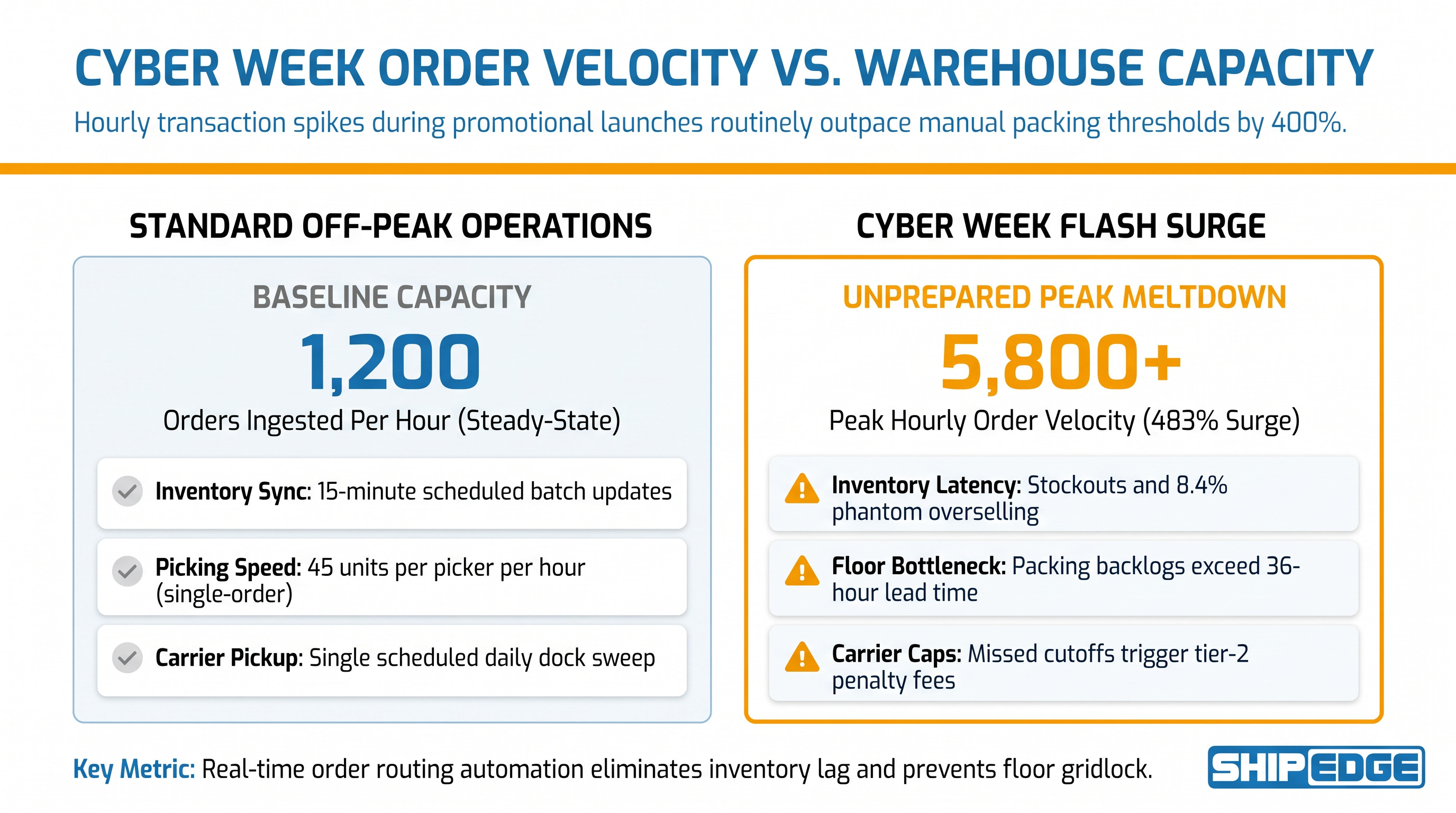
Peak season fulfillment differs fundamentally from everyday operations, where order arrivals follow predictable curves balanced with steady scheduling. During Cyber Week, velocity spikes 300% to 500% within hours. When intake violently outpaces packing capacity, friction cascades across your supply chain. Managing this ecommerce peak season requires strict operational control.
Operational collapse begins upstream in data synchronization. When systems process simultaneous marketplace orders, latency creates phantom inventory—selling units already claimed in other carts. Pickers encounter empty bins, triggering manual searches that stall picking velocity and overwhelm support desks.
Macroeconomic headwinds compound warehouse floor challenges in 2026. Tight labor markets make temporary staffing costly and difficult to scale without sacrificing accuracy. Meanwhile, parcel carriers have shortened acceptance windows and instituted rigid volume caps. Surviving peak season logistics requires shifting from reactive triage to automated process control.
Effective peak fulfillment begins long before cartons leave shelves. Strategic positioning places high-velocity stock in optimal locations to minimize cycle times. Operations managers must audit SKU velocities, enforce inbound cutoffs, and calibrate safety stock thresholds. Disciplined holiday inventory management prevents catastrophic cancellations.
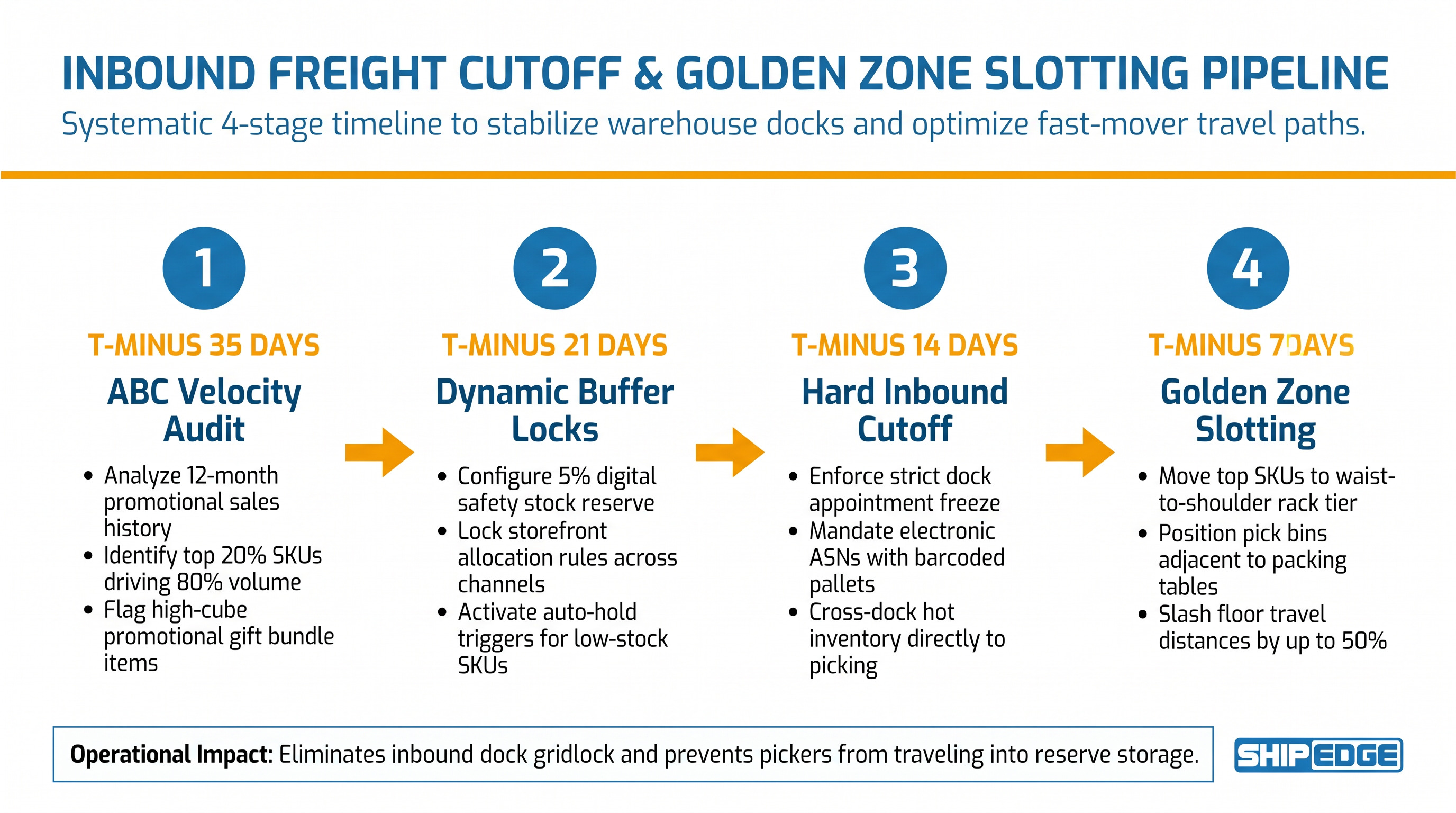
Static safety stock formulas fail during holiday flash sales. High-volume promotions create velocity spikes that deplete reserve stock within forty-eight hours. Operations teams must establish dynamic safety buffers on core promotional SKUs based on projected lift. Setting digital buffers with a five-percent cushion prevents overselling. Protecting your black friday inventory requires dynamic buffer management.
Walking constitutes half of all warehouse picking time. Conduct an ABC velocity analysis across your catalog to identify top promotional items and move them to golden zones adjacent to packing tables. For specialized operations, solutions like BinLogic offer purpose-built warehouse slotting and granular stock tracking that allow mid-market teams to map high-velocity picking locations without complex enterprise deployments.
Receiving inbound freight during peak shipping weeks paralyzes dock operations. Establish a strict inbound cutoff date two weeks before Black Friday. Requiring electronic Advanced Shipping Notices (ASNs) with barcoded manifests enables teams to cross-dock hot promotional inventory directly to forward-pick bins, accelerating throughput.
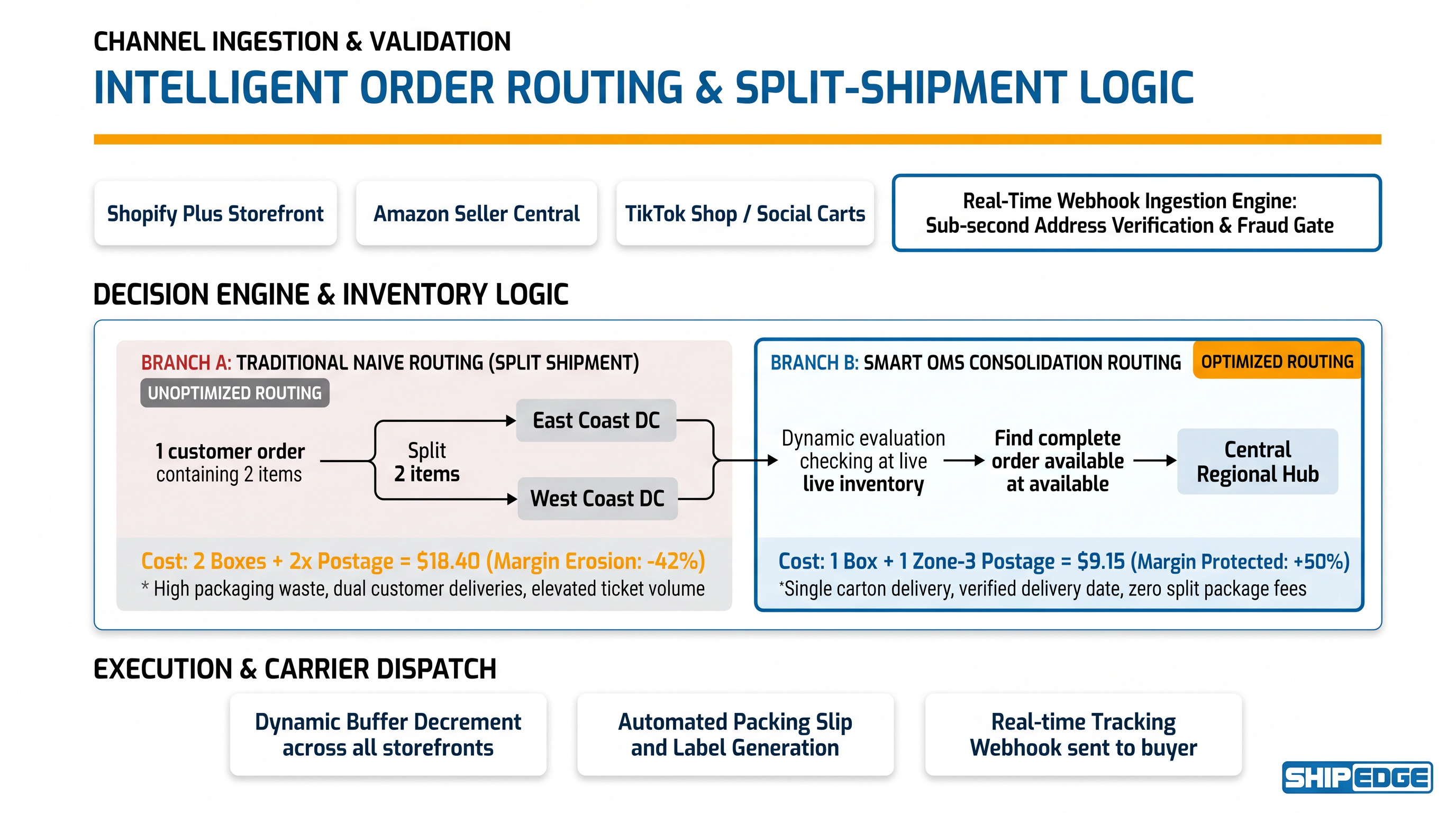
Order management serves as the central nervous system connecting storefronts to warehouse execution. When order volumes explode during Cyber Week, your order management system must ingest, validate, and route thousands of transactions per hour without latency. Automating order logic ensures seamless execution across all channels.
Selling across marketplaces requires inventory decrements within seconds of conversion. When stock levels update on thirty-minute batch cycles, promotional surges cause instant overselling. Cloud architecture uses continuous webhooks to decrement available-to-promise inventory across all channels simultaneously, preventing out-of-stock cancellations.
Split shipments destroy margins by multiplying packaging costs and postage. An intelligent routing engine evaluates real-time inventory availability, postal zones, and service levels to route orders to the single facility fulfilling orders at lowest cost. For growing multichannel brands, platforms like OmniOrders provide specialized order aggregation and multi-store listing controls that simplify cross-channel dispatch.
Disparate inventory pools create deadlocks where orders stall despite stock existing in secondary facilities. Unifying physical inventory into a consolidated pool enables true omnichannel fulfillment. Automated backorder rules place unfillable orders on hold, alerting procurement while preventing pickers from chasing incomplete orders.
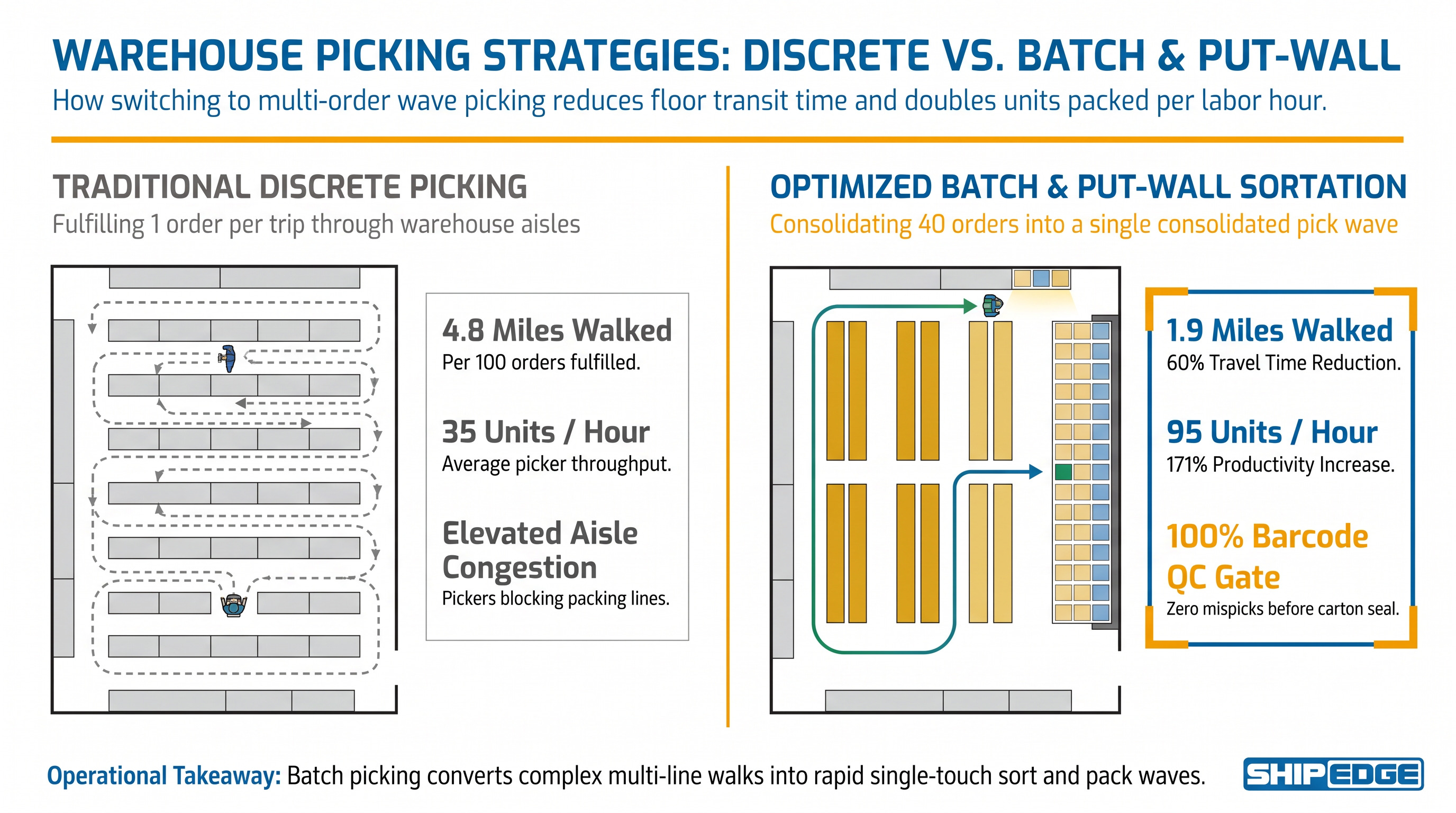
Warehouse floor throughput dictates your operational ceiling. No matter how many orders your storefront processes, revenue remains unrealized until packages are scanned onto carrier trailers. Maximizing throughput within a modern warehouse management system requires transitioning picking strategies, pre-kitting bundles, and standardizing inspection checkpoints. Optimizing your peak season warehouse is vital.
Single-order picking forces pickers to walk miles through warehouse aisles, causing severe floor congestion. Transitioning to batch picking aggregates SKUs across twenty to fifty orders into a single consolidated pick path. Pickers deposit items into multi-tote cluster carts, cutting travel time up to sixty percent.
Holiday gift bundles create massive bottlenecks if assembled during peak picking waves. Audit historical sales data to identify primary bundles and pre-kit them in October. Assembling components into finished cartons with master barcodes converts complex multi-line picks into rapid, single-touch packing operations.
Shipping errors multiply during peak season chaos, generating costly returns and customer churn. Enforce barcode verification at every packing bench. Scanning the packing slip and item barcodes before printing shipping labels eliminates mispicks, verifies SKU accuracy, and protects brand reputation.
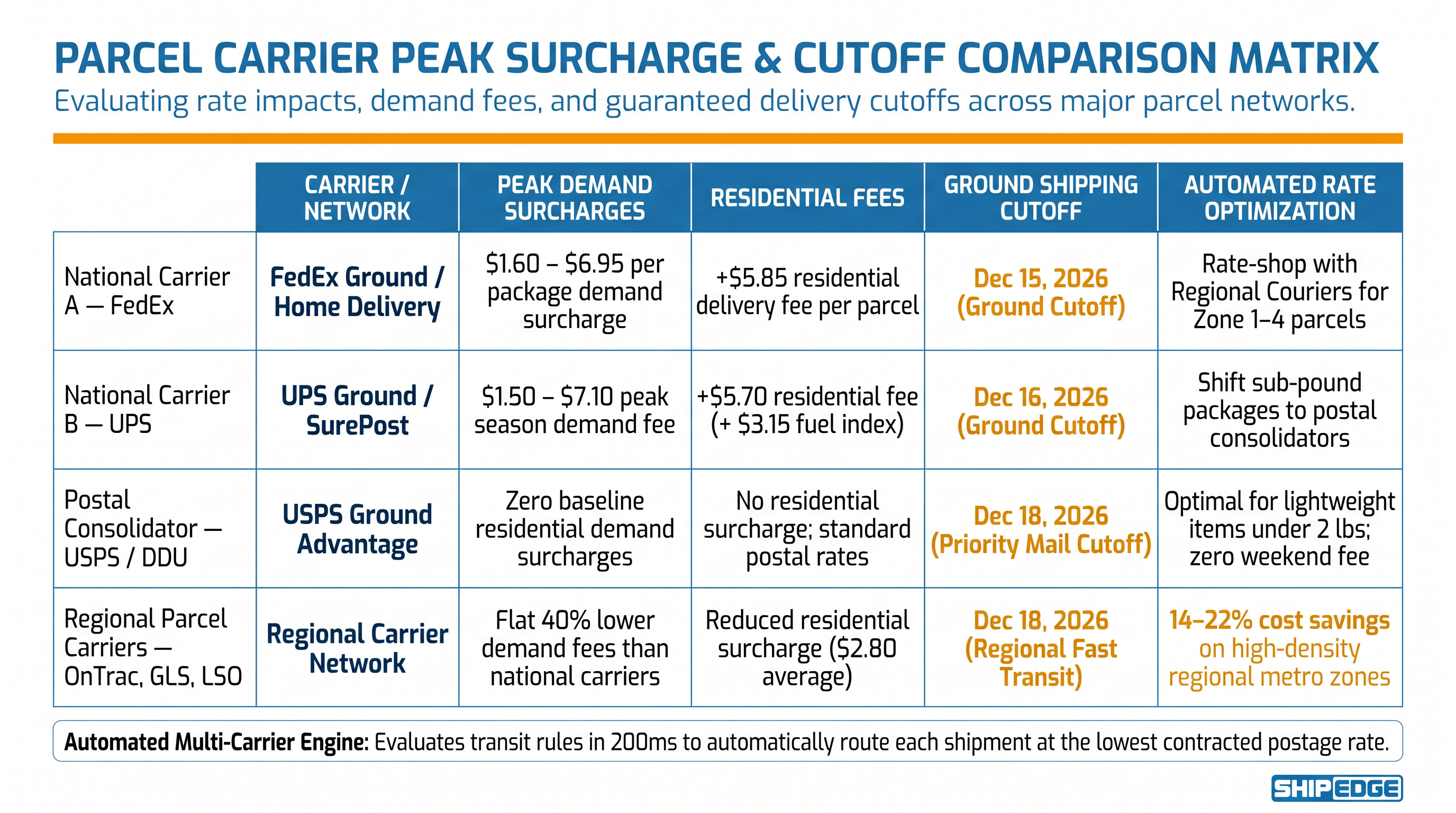
The final mile represents your greatest cost center and most volatile vulnerability during Cyber Week. With national carriers enforcing rigid allocations and steep surcharges, relying on a single provider invites delivery delays. Operations directors must leverage diversified carrier integrations to safeguard delivery timelines and margins.
National parcel carriers implement complex carrier peak surcharges from mid-October through January, levying fees on residential deliveries, oversized cartons, and weekly volume spikes. Unmonitored surcharges erode five to fifteen percent of margins. Audit carrier contracts, verify dimensional divisors, and optimize box sizing before shipping peak volumes.
Relying on a single carrier exposes operations to regional suspensions and premium rates. Automated rate shopping evaluates rates across national carriers, regional couriers, and consolidators in milliseconds. Selecting the most economical service meeting delivery commitments saves an average of twelve percent on holiday shipping.
Late holiday deliveries destroy customer trust and generate heavy support ticket volume. Establish hard operational cutoff dates for Ground, Two-Day, and Next-Day delivery with carrier representatives. Publishing these deadlines across website banners, product pages, and checkout screens prevents disputes. Managing black friday shipping expectations protects customer loyalty.
Reverse logistics is the neglected half of peak fulfillment. With return rates reaching twenty to thirty percent in December, an unprepared floor quickly becomes clogged. Establishing returns workflows before Cyber Week ensures returns do not disrupt outbound shipments. Disciplined black friday logistics protects outbound and inbound flows.
Incoming returns must never mix with outbound fulfillment operations. Designate a segregated quarantine area equipped with inspection tables and mobile scanners. Assigning a dedicated returns team prevents returned parcels from congesting loading docks and obstructing outbound freight.
Every day a return sits unprocessed represents lost working capital during peak shopping. Establish standardized grading rules across four dispositions: immediate restock, repackage, liquidate, or discard. Integrating automated RMA software with your WMS ensures undamaged goods are restocked into active inventory for resale.
Use this actionable 20-point scorecard to execute an exhaustive readiness audit across all departments before November arrives.
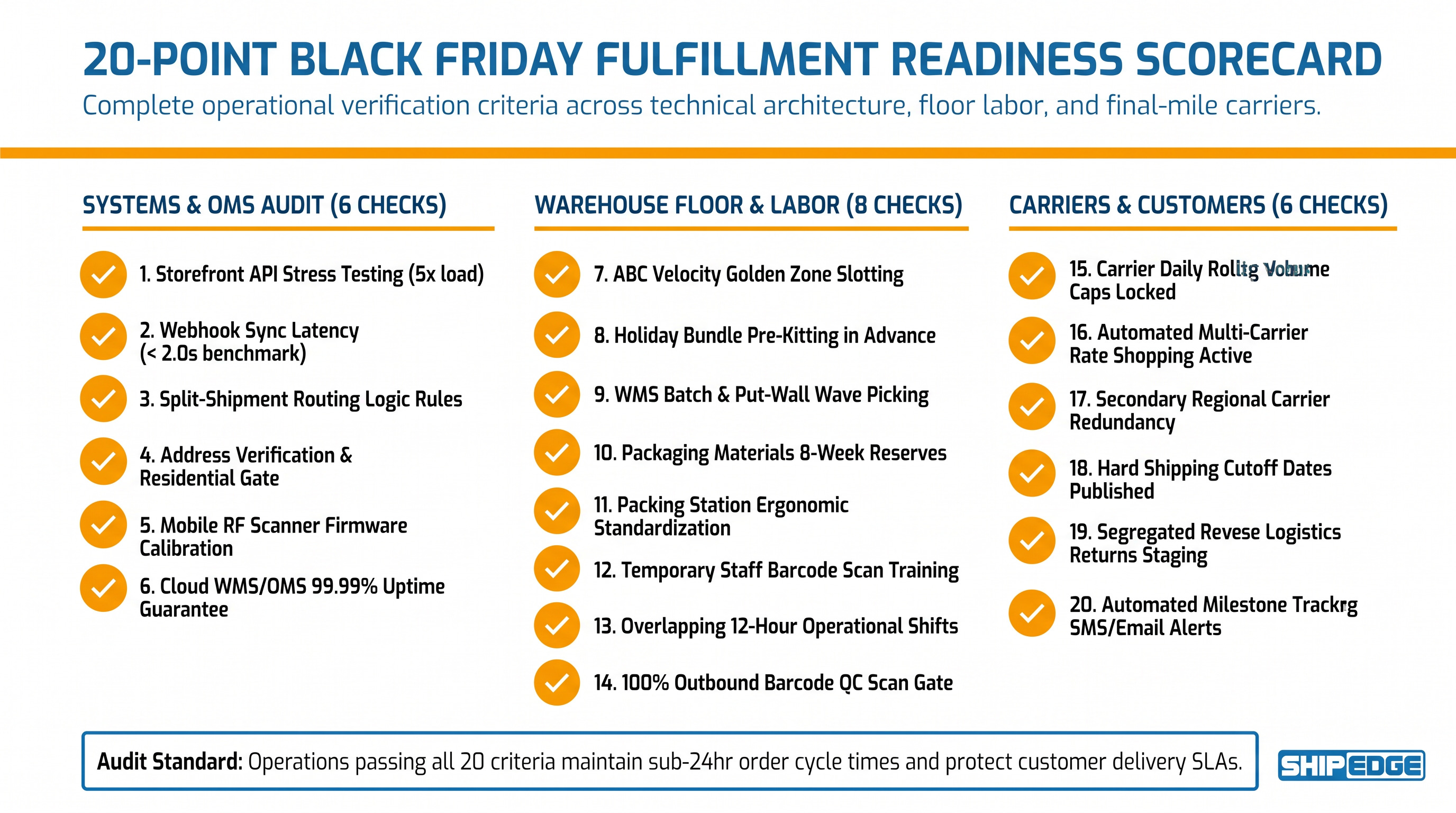
- [ ] 1. API Stress Testing: Benchmark storefront integrations under 5x volume. - [ ] 2. Webhook Latency: Verify inventory sync latency under two seconds. - [ ] 3. Routing Rules: Test rules to eliminate split shipments. - [ ] 4. Address Validation: Activate checkout verification and residential detection. - [ ] 5. Barcode Calibration: Audit mobile scanners and complete updates. - [ ] 6. Server Redundancy: Confirm fulfillment software guarantees 99.99% uptime.
- [ ] 7. Velocity Slotting: Move top promotional SKUs to golden zones. - [ ] 8. Bundle Pre-Kitting: Pre-assemble and barcode holiday bundles in advance. - [ ] 9. Batch Picking: Configure WMS batch picking to cut travel. - [ ] 10. Packaging Reserves: Stock eight weeks of cartons and labels. - [ ] 11. Packing Standardization: Standardize stations with identical tools. - [ ] 12. Labor Onboarding: Train all seasonal staff on barcode workflows. - [ ] 13. Shift Scheduling: Overlap warehouse shifts for continuous throughput. - [ ] 14. QC Scanning: Enforce 100% item scanning before label printing.
- [ ] 15. Carrier Commitments: Finalize daily volume caps and trailer drops. - [ ] 16. Rate Shopping: Audit rate tables, dimensional rules, and surcharges. - [ ] 17. Regional Redundancy: Activate secondary carriers for parcel overflow. - [ ] 18. Shipping Cutoffs: Display order deadlines on site banners and checkout. - [ ] 19. Returns Staging: Segregate floor space for December return processing. - [ ] 20. Tracking Alerts: Configure automated SMS and email delivery alerts.
Executing an airtight peak fulfillment strategy requires software built for extreme volume. Shipedge provides an end-to-end, cloud-native warehouse and order management ecosystem engineered for enterprise retailers, omnichannel brands, and high-volume 3PLs. From sub-second inventory synchronization to automated rate shopping, Shipedge eliminates peak friction. Preparing your black friday warehouse ensures flawless execution under intense volume.
Shipedge WMS delivers real-time visibility and warehouse control. With intelligent wave picking, put-wall sortation, and mobile RF scanning, Shipedge empowers teams to pick, pack, and ship at maximum speed with 99.9% accuracy. Cloud infrastructure guarantees uninterrupted uptime during peak flash sales.
Shipedge OMS unifies distributed inventory across warehouses and storefronts into a centralized engine. Automated rules route orders to optimal fulfillment nodes, prevent costly split shipments, and eliminate overselling through instantaneous decrements. Custom routing handles backorders and promotional kits seamlessly.
With direct integrations across national carriers, regional couriers, and consolidators, Shipedge provides real-time rate shopping at packing benches. The platform automatically selects the lowest-cost shipping service meeting delivery guarantees while factoring in peak surcharges and dimensional rules.
Black Friday 2026 presents historic revenue opportunities, but capitalizing on them depends on operational execution. Breakdowns in routing, picking, or carrier coordination turn record sales into customer churn and margin erosion. The next five weeks are your window to eliminate vulnerabilities and position your fulfillment infrastructure for peak success.
Focus your operational execution where it matters most: 1. Lock In Carrier Capacity: Finalize daily pickup allocations and configure automated multi-carrier rate shopping to mitigate peak demand surcharges. 2. Re-Slot and Pre-Kit: Move high-velocity promotional SKUs to warehouse golden zones and pre-assemble high-volume holiday bundles. 3. Stress-Test Critical Systems: Validate API synchronization latency, automated routing rules, and real-time inventory decrements under simulated peak loads.
Do not wait for Cyber Week surges to expose hidden cracks in your supply chain. Ensure your warehouse floor, order routing engine, and shipping workflows are prepared for peak volume. To see how an enterprise WMS and OMS platform transforms peak season fulfillment, request a demo with Shipedge today.
Ecommerce brands should begin Black Friday fulfillment preparation at least eight to twelve weeks prior to Cyber Week, with final audits completed five weeks out. By late September, brands must finalize demand forecasting, schedule production runs, and secure supplier delivery commitments. In October, warehouses must lock in carrier capacity, pre-kit bundles, re-slot promotional SKUs, and train seasonal labor before active peak volume begins.
The most common cause of fulfillment failure during Black Friday is the technical synchronization gap between e-commerce sales channels and warehouse inventory systems. When sudden order volume outpaces inventory update intervals, brands oversell out-of-stock items. This discrepancy creates cascading picking bottlenecks, backorders, and customer service gridlock that paralyzes warehouse operations and causes severe delivery delays across the entire peak shipping pipeline.
Brands prevent overselling by deploying enterprise order management software with sub-second inventory synchronization across all online sales channels. Additionally, operations teams should establish dynamic safety stock buffers of three to five percent on high-velocity promotional SKUs. Implementing automated inventory hold triggers prevents storefront carts from claiming stock that has already been routed to active picking waves across the warehouse floor.
Carrier peak season demand surcharges significantly erode gross margins by adding flat fees to residential deliveries, additional handling services, and oversized packages. Between October and January, national parcel carriers impose these demand fees to offset network congestion. Unprepared brands that fail to audit carton dimensions or deploy automated multi-carrier rate shopping absorb these expenses directly, severely diminishing holiday promotional profitability.
Ecommerce brands should typically hold an additional ten to fifteen percent buffer of safety stock for top-tier promotional items during Black Friday. However, this buffer should be calculated dynamically based on supplier lead times, historical flash-sale stockout rates, and projected marketing conversion spikes. Allocating buffer inventory prevents stockouts while ensuring customer service teams have replacement stock for transit damage claims.
Batch picking combined with cluster picking and put-wall sortation is the most efficient method for high-volume peak season orders. Instead of having workers walk the warehouse floor fulfilling one order at a time, batch picking directs pickers to collect bulk product quantities for dozens of orders in a single pass. This workflow reduces travel time by up to sixty percent and dramatically accelerates packing throughput.
Brands should prepare for holiday returns by establishing a physically segregated returns processing zone and configuring automated return merchandise authorization workflows before Black Friday arrives. Return volume routinely spikes to thirty percent in December and January. Designating dedicated return inspection benches, restocking lanes, and standardized grading criteria ensures returned inventory is quickly inspected and restocked without obstructing outbound shipments.