EN │ ES
Automated Logistics
Shipedge
September 25, 2026
When you automate logistics, you replace manual data entry, routing, and inventory tracking with intelligent software systems. This reduces human error, speeds up fulfillment, and ensures scalable operations during high-demand periods like the Q4 peak season.
The logistics landscape is shifting faster than ever as we head into the final months of 2026. If you want to remain competitive, figuring out how to automate logistics is no longer optional. Supply chains face unprecedented pressures from rising consumer expectations, tighter delivery windows, and shifting global economic factors. Peak season brings a massive surge in order volumes. For warehouse directors and e-commerce brands, relying on manual processes during this time is a recipe for delayed shipments, stockouts, and dissatisfied customers.
The primary goal when you automate logistics is to build resilience. An automated logistics system seamlessly connects your inventory data with order processing and fulfillment execution. By removing bottlenecks, you empower your team to focus on strategic tasks rather than repetitive data entry. We are seeing a significant transformation in 2026, driven largely by advances in artificial intelligence and machine learning. These technologies provide unprecedented visibility and predictive capabilities. They allow operations to scale up effortlessly when Black Friday hits.
In this comprehensive guide, we will explore exactly what it means to bring automation into your fulfillment strategy. We will break down why logistics automation software is critical before the holiday rush. Furthermore, we will outline actionable steps to implement these technologies effectively. From order management to warehouse execution, automation touches every aspect of the modern supply chain. By the end of this article, you will have a clear roadmap to prepare your operations for the most demanding quarter of the year.
Automation in logistics refers to the use of technology to streamline supply chain operations with minimal human intervention. This encompasses everything from software algorithms routing orders to physical robotics moving goods in the warehouse. By deploying a logistics automation system, businesses transform complex, labor-intensive tasks into seamless, predictable workflows. When correctly implemented, logistic automation is invisible to the consumer but highly visible in your bottom line. It fundamentally restructures how data flows through your organization.
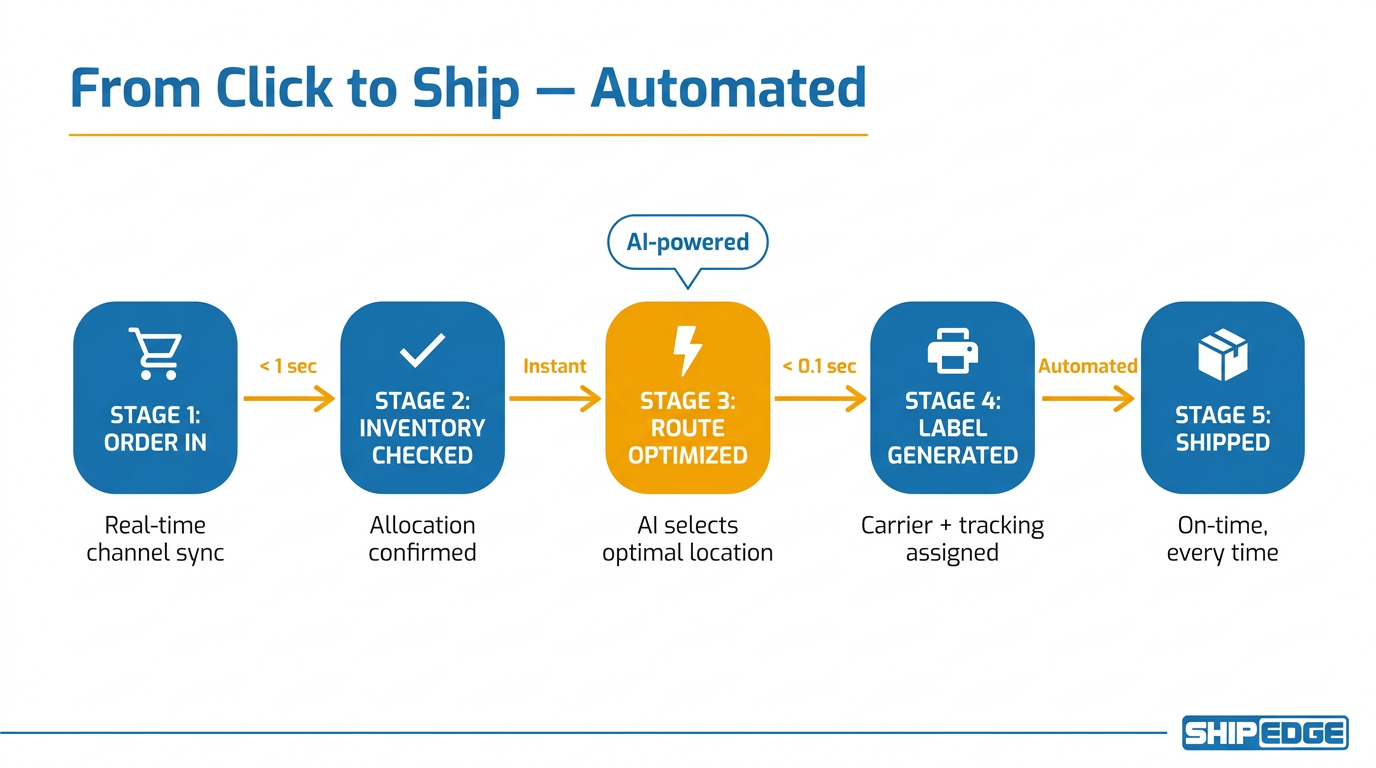
At its core, a logistic automation strategy connects disparate data points across the supply chain. In the past, workers had to manually reconcile inventory levels across spreadsheets and physical counts. Today, automation software syncs this data in real time. When a customer places an order online, the system instantly allocates the inventory, selects the optimal fulfillment center, and generates a pick list. This level of synchronization eliminates the lag time inherent in manual operations.
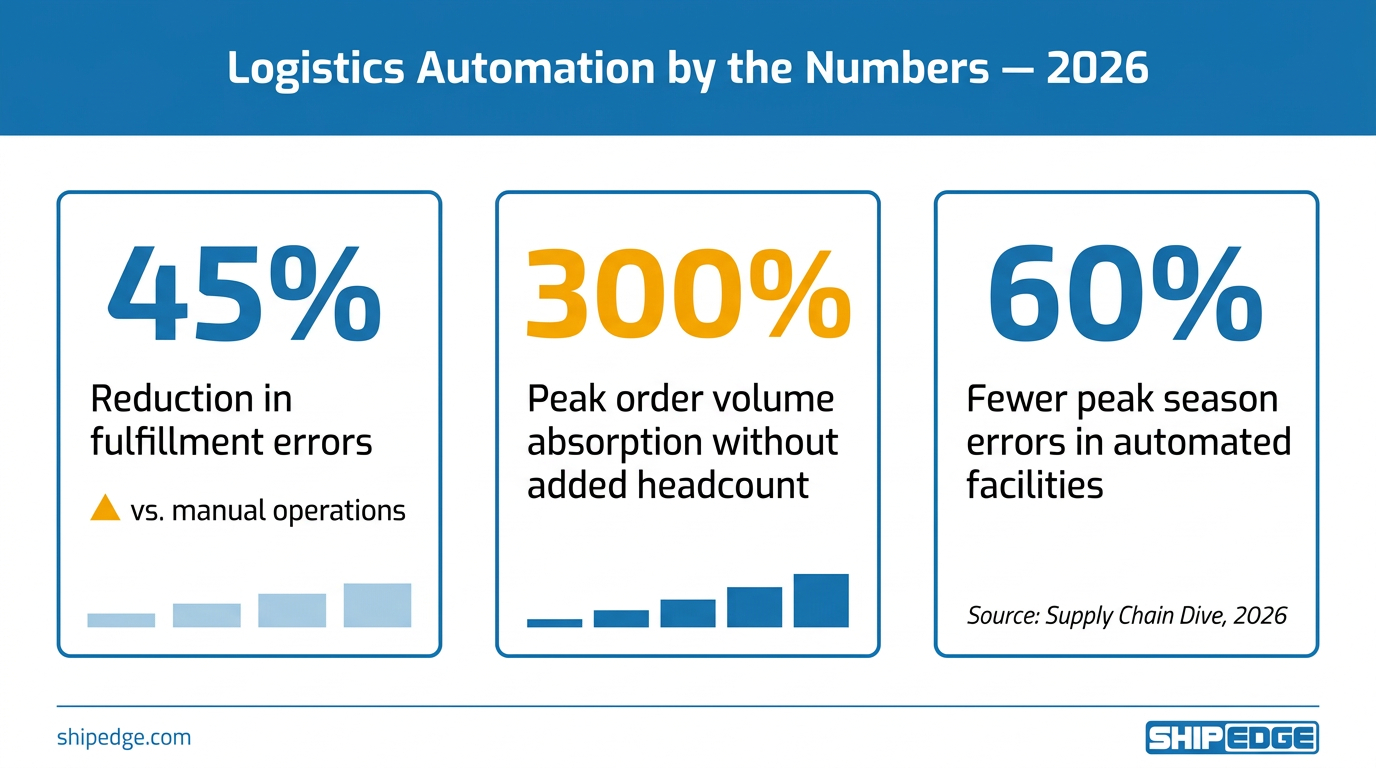
Furthermore, automation provides an undeniable advantage in data accuracy. Human error is inevitable when workers are tasked with entering thousands of data points daily. An automated supply chain reduces these errors dramatically. Mis-ships, incorrect inventory counts, and lost orders become increasingly rare. According to a 2026 report by Gartner, organizations that fully automate their core logistics processes experience a 45% reduction in fulfillment errors. This directly translates to higher customer satisfaction and lower reverse logistics costs. The core is all about creating a single source of truth that operates at the speed of modern commerce. When every system pulls from the same accurate database, decision-making becomes proactive rather than reactive.
The technology landscape in 2026 has pushed the boundaries of what is possible in fulfillment. Early automated logistics systems were rigid and rules-based. They required extensive programming and struggled to adapt to sudden changes in order profiles or supply chain disruptions. Modern systems, however, leverage adaptive algorithms that learn and adjust dynamically. This means the software can automatically reroute orders if a particular warehouse is experiencing delays or weather disruptions. This flexibility is exactly what modern e-commerce requires.
We also see a deeper integration between software and physical automation. Warehouse management systems now communicate flawlessly with automated storage and retrieval systems (AS/RS) and autonomous mobile robots (AMRs). This harmony between bits and atoms means that physical fulfillment speeds are catching up with digital processing speeds. When you automate logistics today, you are deploying a holistic ecosystem that optimizes every touchpoint from the supplier to the final mile. This evolution is precisely why upgrading before peak season is so critical; legacy systems simply cannot keep pace with the efficiency of modern platforms.
The fourth quarter is the ultimate stress test for any supply chain. Order volumes can spike by 300% or more, placing immense pressure on warehouse staff and fulfillment infrastructure. Relying on manual workflows during this period almost guarantees failure. Logistics automation software acts as the critical shock absorber that allows your operations to scale without a proportional increase in headcount or chaos. By addressing these foundational challenges, automation provides a massive return on investment.
Peak season is defined by rapid, massive influxes of orders. Black Friday and Cyber Monday alone can generate weeks' worth of volume in just a few days. Manual order processing simply cannot handle this throughput. Workers get overwhelmed, leading to backlogs that cascade through the entire fulfillment process. A robust logistics automation system, however, ingests and processes thousands of orders per minute without breaking a sweat. It automatically validates addresses, checks inventory availability, and routes the order to the most efficient facility.
This rapid processing capability ensures that orders reach the warehouse floor immediately. There is no delay waiting for a manager to batch and release orders. Furthermore, the software can intelligently group orders for efficient picking, maximizing the productivity of your warehouse staff. This scalability is the primary reason brands invest heavily in automation. It transforms peak season from a logistical nightmare into a highly orchestrated, profitable event. With the right tools, volume surges become an opportunity for revenue rather than a cause for operational panic.
When warehouse staff are rushed to meet aggressive peak season deadlines, mistakes happen. Mis-picks, incorrect packing, and shipping to the wrong address are all common casualties of manual fulfillment under pressure. These errors are incredibly costly. You lose the profit margin on the initial sale, incur the cost of reverse logistics, and often lose the customer's lifetime value. Automating your workflows introduces rigorous digital checks and balances that prevent these mistakes.
For example, barcode scanning integrated with a warehouse management system ensures that the picker selects the exact correct SKU every time. The system will physically not allow the order to proceed if the wrong item is scanned. Similarly, automated dimensional weighing ensures that the correct shipping label is generated, avoiding costly carrier adjustments later. By relying on digital verification rather than human eyesight, you protect your margins. A 2026 study by Supply Chain Dive found that automated facilities reduce peak season error rates by up to 60% compared to their manual counterparts.
Consumers in 2026 expect their orders to arrive within two days, even during the holiday rush. Meeting this expectation requires absolute efficiency inside the four walls of the warehouse. Manual processes inherently introduce delays. Walking the warehouse floor with paper pick lists, searching for misplaced inventory, and manually typing shipping labels all consume valuable time. Logistics automation software strips away these inefficiencies and replaces them with continuous workflow execution.
Automated routing sends pickers on the most optimized path through the warehouse. Orders are automatically assigned to the best carrier based on delivery speed and cost algorithms. The entire process, from click to ship, is compressed. This speed is a competitive differentiator. When customers know they can rely on your brand for fast, accurate delivery during the holidays, they are significantly more likely to return. Faster fulfillment not only saves money on labor but also drives top-line revenue through increased customer loyalty.
To fully automate logistics, you must look at the supply chain holistically. Automation is not a single tool but a network of integrated systems that manage specific operational domains. Identifying the key areas for implementation ensures that you are investing in technology that delivers the highest return on investment. The three most critical pillars are warehouse execution, order management, and shipping operations.
The warehouse is the physical heart of your fulfillment strategy. Automating operations here yields massive efficiency gains. A modern Warehouse Management System (WMS) digitizes all core activities: receiving, putaway, picking, packing, and shipping. Instead of relying on tribal knowledge or paper records, the WMS directs workers exactly where to go and what to do via mobile devices. This directed work dramatically reduces travel time and eliminates the search for lost inventory.
Furthermore, a WMS automates complex workflows like wave picking, batch picking, and cross-docking. It optimizes storage density by dynamically assigning bin locations based on product velocity. For operations teams that need granular inventory control, newer platforms like BinLogic offer real-time stock visibility across multiple warehouse locations at a fraction of the cost of legacy systems. This ensures that every square foot of the facility is utilized effectively. WMS automation is non-negotiable for handling peak season volumes accurately and efficiently.
Before an order even reaches the warehouse, it must be processed and intelligently routed. This is the domain of the Order Management System (OMS). An automated OMS sits between your sales channels and your fulfillment centers. It aggregates orders from Shopify, Amazon, wholesale channels, and B2B portals into a single, unified dashboard. The automation engine then evaluates each order against predefined business rules.
These rules dictate fulfillment logic. For example, the system will automatically route the order to the warehouse closest to the end customer to minimize shipping costs and transit times. If an item is out of stock in the primary facility, the OMS can automatically split the order or route it to a backup location. Platforms like OmniOrders are built specifically for multichannel sellers who need real-time order visibility across various channels without the complexity of enterprise systems. This automated decision-making happens in milliseconds, ensuring rapid processing without human intervention.
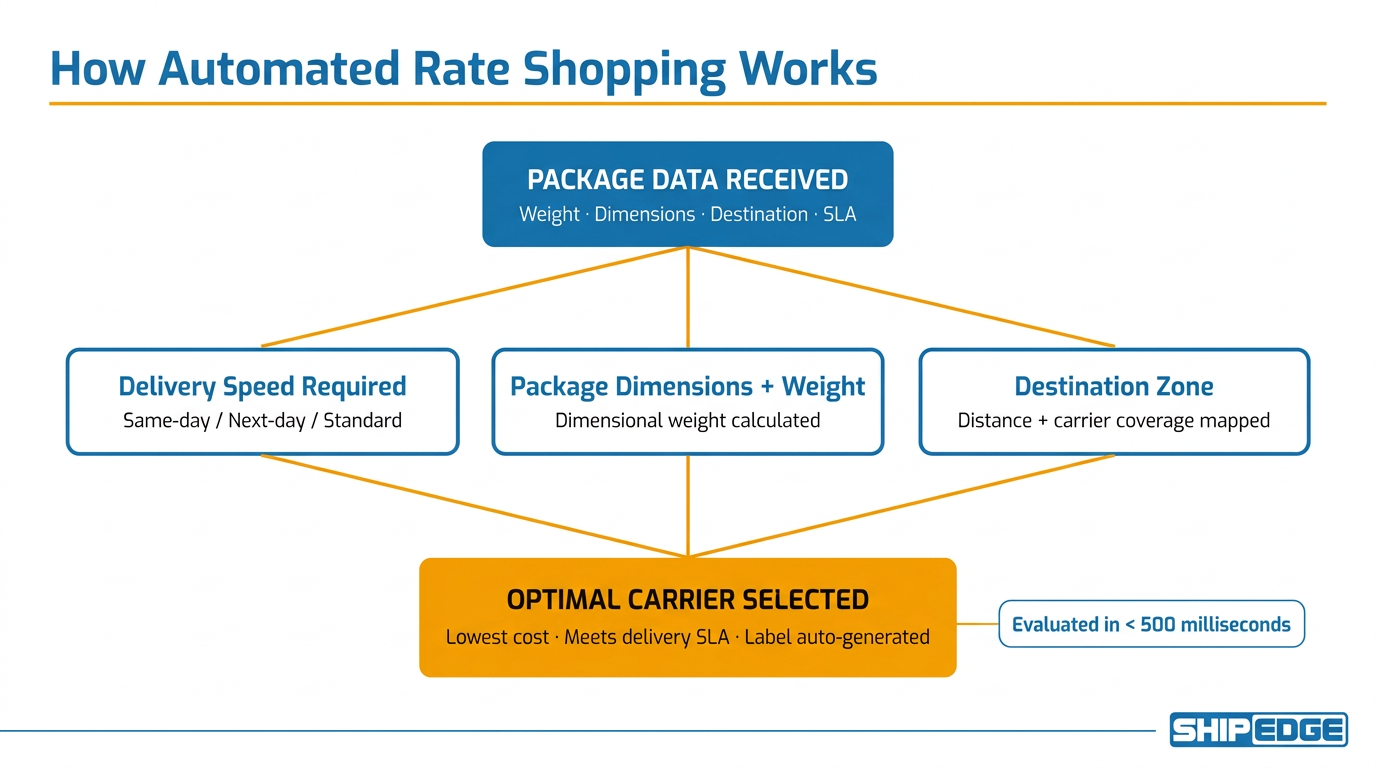
The final mile is often the most expensive component of fulfillment. Automating shipping processes is crucial for protecting margins. Automated carrier selection algorithms, often called rate shopping, evaluate every package against dozens of carrier options in real time. The system considers package dimensions, weight, destination, and required delivery date to select the cheapest carrier that meets the SLA.
This eliminates the need for shipping clerks to manually compare rates on carrier websites. Furthermore, automation handles label generation and manifests instantly. Advanced systems can even automate claims processing for lost or damaged packages. By removing the guesswork from shipping, you guarantee that every order ships at the lowest possible cost while still meeting customer expectations. This level of optimization is particularly vital during peak season when carrier rates are subject to peak surcharges.
Artificial intelligence has moved from a buzzword to a foundational component of modern supply chain technology. In 2026, ai automation for logistics is fundamentally changing how businesses plan and execute their fulfillment strategies. AI is no longer just about doing things faster; it is about making smarter decisions proactively. This intelligence is the key to navigating the complexities of peak season with confidence. The ability to predict outcomes before they happen transforms a fragile supply chain into a robust operation.
Historically, forecasting relied on looking at historical sales data and making educated guesses about the future. AI-driven predictive analytics completely changes this dynamic. These systems ingest massive datasets, including historical sales, market trends, social media sentiment, and even weather patterns. The AI analyzes these variables to generate highly accurate demand forecasts down to the SKU and location level.
This predictive capability allows businesses to position inventory optimally before peak season begins. Instead of overstocking safety stock at every facility, you can strategically place goods exactly where demand will materialize. This reduces carrying costs and minimizes the risk of stockouts. Predictive analytics also helps with labor planning, allowing warehouse managers to schedule the exact number of workers needed for specific shifts based on anticipated volume. The result is a leaner, more agile operation that is perfectly calibrated for peak demand.
The integration of physical robotics with software systems is a defining trend of 2026. Autonomous Mobile Robots (AMRs) are now commonplace in modern warehouses. Unlike older, fixed-path AGVs, AMRs navigate the facility intelligently, adapting to obstacles and changing layouts. They work collaboratively with human pickers to dramatically increase throughput.
For example, an AMR can transport a picked order from the aisle directly to the packing station, allowing the human worker to remain in the picking zone. This eliminates the unproductive walking time that accounts for a massive portion of warehouse labor costs. Integrating AMRs with a robust WMS allows for dynamic task orchestration. The software directs both humans and robots in a synchronized ballet of efficiency. This combination of bits and atoms is the pinnacle of modern fulfillment strategy.
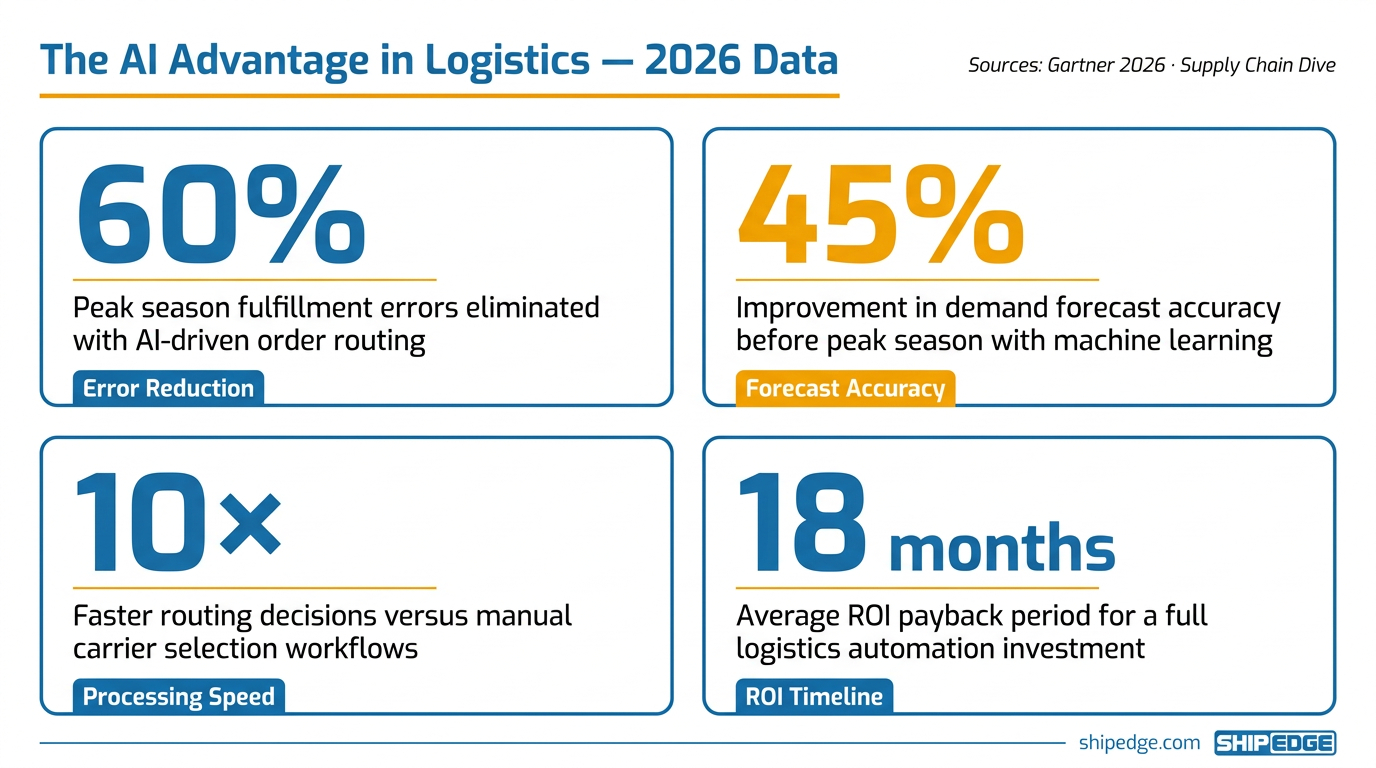
Machine learning algorithms continuously analyze operational data to find inefficiencies that humans might miss. In the context of automated supply management, these algorithms optimize replenishment cycles and procurement strategies. They learn supplier lead times, account for variability, and automatically trigger purchase orders at the exact right moment to prevent stockouts without holding excess inventory.
Furthermore, machine learning optimizes warehouse slotting. The system analyzes order velocity and affinity (items frequently purchased together) to suggest new bin locations. High-velocity items are automatically moved closer to the packing stations, reducing travel time. This continuous, automated optimization ensures that the warehouse layout evolves dynamically as order profiles change. This self-tuning capability is a massive advantage when adapting to the sudden shifts in demand that characterize peak season.
One frequently overlooked area where AI is making a major impact in logistics is product data creation. Building and maintaining an accurate SKU catalog has traditionally been one of the most labor-intensive bottlenecks in fulfillment operations — requiring manual photography, background editing, description writing, and SKU assignment for every new item added to inventory. Heading into Q4, this process slows down product launches precisely when time is most critical.
Platforms like Shelfter's AI Catalog Builder are eliminating this bottleneck entirely. The system identifies products from a single photograph, automatically removes backgrounds, generates optimized product descriptions, and assigns unique SKUs — then publishes listings across all connected sales channels in one click. For operations preparing for peak season, this means new inventory can go from receiving dock to live listing in minutes rather than days, removing a manual data entry process that has long held back the speed of modern fulfillment.
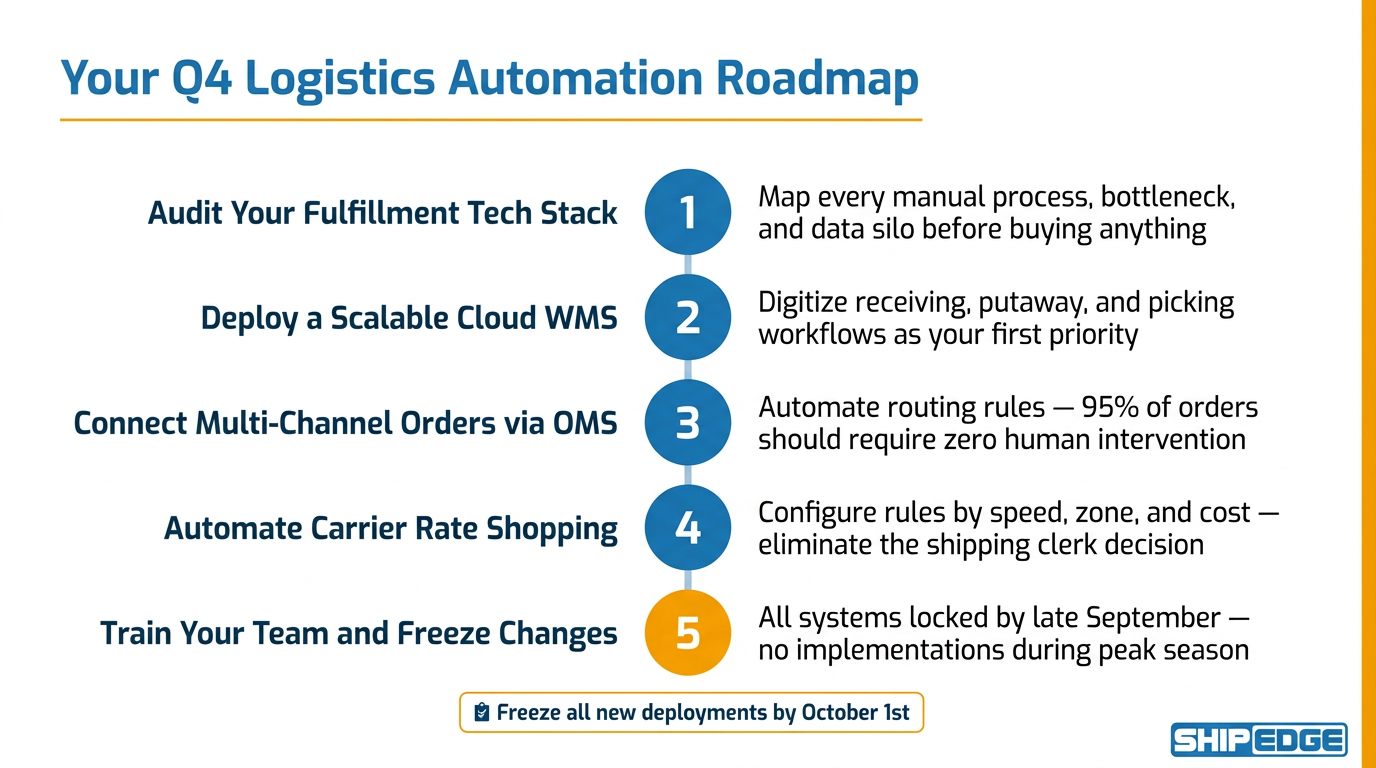
Upgrading your fulfillment infrastructure requires a methodical approach. Attempting to implement a massive overhaul overnight is a recipe for disaster, especially as peak season approaches. You must follow a structured implementation plan to ensure that the new technology integrates seamlessly with your existing processes and actually delivers the promised ROI. Here are the five critical steps to successfully automate logistics operations without disrupting your current business.
The first step is a rigorous assessment of your current capabilities. You cannot fix what you do not fully understand. Document every manual process, software tool, and data silo currently in use. Where are the bottlenecks? Which processes rely on tribal knowledge rather than documented procedures? Identify the specific pain points that are costing you the most money or causing the most delays.
This audit should involve input from every level of the organization, from warehouse floor workers to supply chain directors. Often, the workers on the floor understand the inefficiencies better than management. By mapping out the current state, you create a baseline against which you can measure the success of your automation initiatives. This clear understanding prevents you from investing in technology that solves the wrong problems.
A robust Warehouse Management System is the foundation of any automated fulfillment strategy. Select a WMS that is cloud-based, highly configurable, and built for scalability. The system must support advanced workflows like barcode scanning, directed picking, and dynamic slotting. Ensure that the WMS integrates seamlessly with your physical automation hardware, such as conveyors or AMRs.
During implementation, focus on digitizing the core workflows first. Get receiving, putaway, and basic picking running flawlessly before attempting to deploy more advanced features like wave planning. A phased rollout minimizes disruption to ongoing operations. Furthermore, ensure that the WMS provides real-time visibility into inventory levels across all locations. Accurate inventory data is the prerequisite for all other automated decision-making.
Once the physical warehouse is digitized, you must automate the flow of orders into the facility. Implementing an Order Management System connects your diverse sales channels to your fulfillment network. Configure the OMS to automatically aggregate orders from all sources into a single queue.
Next, define the business rules that will govern order routing. Establish logic for geographic routing, inventory availability checks, and split shipments. The goal is to ensure that the OMS can automatically determine the optimal fulfillment strategy for 95% of orders without human intervention. This automated orchestration is what allows you to scale order volume infinitely without overwhelming your customer service or operations teams.
With the warehouse and order flow automated, turn your attention to the final mile. Integrate a rate shopping engine or a Transportation Management System (TMS) to automate carrier selection. Configure the system with all of your negotiated carrier rates and service levels.
Set up rules that automatically select the lowest-cost carrier that meets the delivery timeframe promised to the customer. This removes the manual decision-making from the shipping station. Furthermore, automate the generation of shipping labels and customs documentation for international orders. By streamlining the shipping process, you ensure that packages move out the door as quickly as they were picked and packed.
The most sophisticated technology is useless if your team does not know how to use it. Comprehensive training is the most frequently overlooked step in automation projects. Do not assume that workers will intuitively understand the new workflows. Provide hands-on training with the actual devices and software they will be using on the floor.
Create clear, documented standard operating procedures (SOPs) for every automated task. Assign super-users who can act as internal champions and troubleshoot basic issues. Furthermore, emphasize the benefits of the new system to the workers themselves. When they understand that automation is designed to make their jobs easier and safer, they are much more likely to embrace the change. Effective training ensures a smooth transition and rapid time-to-value for your investment.
Even with a solid plan, implementing automation is fraught with potential pitfalls. Many organizations invest heavily in technology only to see marginal improvements because they stumbled during execution. Understanding these common mistakes allows you to navigate the implementation process more safely and ensures your systems are ready for the peak season stress test. These oversights can cost millions in lost revenue and severely damage customer relationships if not mitigated early.
The single biggest mistake companies make is attempting to implement new logistics software immediately before or during peak season. Implementing a WMS or OMS requires a learning curve. Your staff needs time to adjust to the new workflows, and you need time to work out the inevitable software bugs and integration hiccups. Attempting this under maximum volume is extremely dangerous.
If you launch a new system in November, you are introducing massive risk at the worst possible time. A botched implementation can bring your fulfillment operations to a grinding halt during your most profitable weeks. The golden rule is to freeze all major system changes by late September or early October at the latest. This gives your team a buffer period to gain confidence with the new automated logistics system before the Black Friday volume hits.
Logistics software cannot operate in a vacuum. A WMS must talk to the OMS, which must talk to the ERP, which must talk to the shopping cart. A common mistake is purchasing a "best-of-breed" point solution without thoroughly evaluating its API architecture and integration capabilities. If the systems cannot pass data back and forth seamlessly, the automation fails entirely.
If your systems cannot communicate seamlessly in real time, you will end up building brittle workarounds or relying on manual data uploads. This defeats the entire purpose of automation. When evaluating vendors, prioritize platforms with open, well-documented APIs and pre-built connectors to the other tools in your tech stack. Seamless integration is the glue that holds an automated supply chain together.
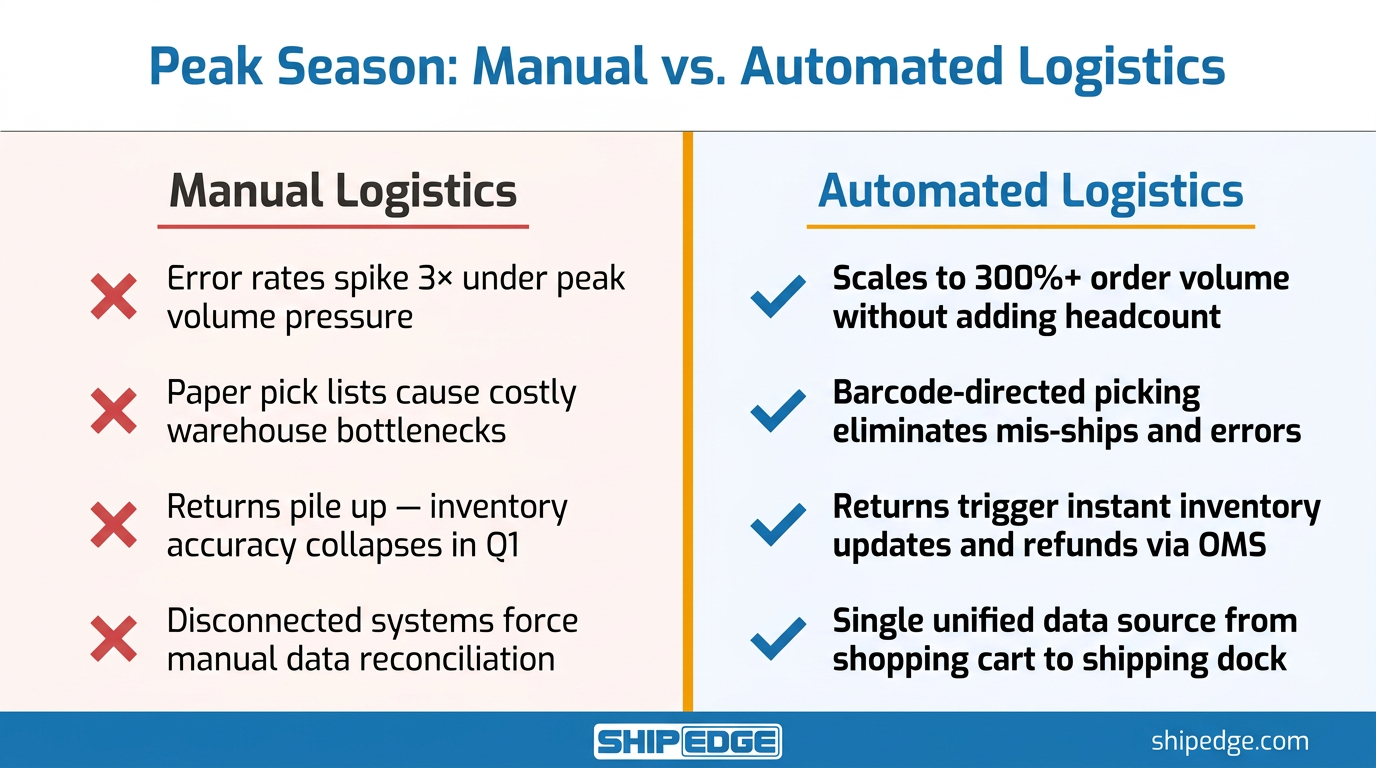
While everyone focuses on getting orders out the door, many companies completely forget to automate reverse logistics. Returns are a massive operational burden, especially after the holiday season. Handling returns manually is labor-intensive and leads to inaccurate inventory levels and delayed customer refunds. Ignoring this area creates a massive backlog that drags down Q1 profitability.
Your logistics automation strategy must include robust workflows for receiving, inspecting, and restocking returned items. An automated system should instantly update inventory availability the moment a return is processed and automatically trigger the refund via the OMS. By automating reverse logistics, you turn a major cost center into a streamlined process that protects your margins and improves the post-purchase customer experience.
When the pressure of Q4 peak season hits, you need a technology partner you can trust. Shipedge provides a comprehensive, cloud-native platform designed specifically to help e-commerce brands and 3PLs completely automate logistics operations. Our architecture eliminates data silos, providing a single source of truth from the shopping cart to the shipping dock. We empower operations teams to scale effortlessly without sacrificing accuracy or margin.
Shipedge removes the friction of integrating disparate systems by offering a unified Warehouse Management System and Order Management System natively. This means your order data, inventory counts, and fulfillment logic reside in the exact same database. When an order drops, the system instantly validates inventory and directs the warehouse floor without any API lag or synchronization errors. This unified approach provides unprecedented visibility and control, ensuring your operations remain agile during massive volume spikes.
Our advanced automation engine handles the complex logic of multi-channel fulfillment effortlessly. Shipedge allows you to define intricate business rules for order routing across multiple warehouses, drop-shippers, or 3PL partners. The system automatically evaluates inventory availability, proximity to the customer, and shipping costs in milliseconds. This ensures that every single order is routed for the fastest, most cost-effective fulfillment possible, entirely without human intervention.
The final mile is where margins are often lost. Shipedge protects your profitability with native integrations to dozens of global and regional carriers. Our automated rate shopping algorithm evaluates every package in real time, instantly selecting the optimal carrier based on your specific rules and negotiated rates. We automate label generation, manifesting, and tracking updates, streamlining the entire shipping process so your team can focus on getting more volume out the door faster.
Logistics automation is the deployment of software systems, machinery, and artificial intelligence to execute supply chain tasks with minimal human intervention. This includes automating order routing, inventory tracking, picking workflows, and carrier selection. The goal is to replace manual data entry and physical processes with digital speed and accuracy, reducing errors and enabling operations to scale efficiently during high-demand periods.
An automated logistical specialist is a professional responsible for supervising, maintaining, and optimizing the technology systems that drive modern supply chains. Originally a military designation (like the Army 92A role), the term now broadly applies to operations managers who configure WMS platforms, oversee automated routing rules, and ensure that software and robotics operate seamlessly to maintain high fulfillment velocity.
Implementing logistics automation software typically takes between 4 to 12 weeks, depending on the complexity of your operations and the number of integrations required. A straightforward WMS deployment for a single facility can be rapid, while a multi-node omnichannel rollout takes longer. To ensure success, businesses must finalize all implementations well before the Q4 peak season begins to allow for adequate staff training.
Yes, modern AI automation for logistics is specifically designed to integrate seamlessly with existing Enterprise Resource Planning (ERP) systems like NetSuite, SAP, or Microsoft Dynamics. These platforms utilize open APIs and pre-built connectors to synchronize data bidirectionally. This ensures that AI-driven insights regarding demand forecasting and automated supply replenishment flow directly into your core financial and operational systems in real time.
The ROI of an automated logistics system is typically realized within 12 to 18 months through massive reductions in labor costs and fulfillment errors. Businesses see immediate savings from automated rate shopping and optimized warehouse routing. Furthermore, the ability to process higher order volumes without adding headcount directly increases profit margins, making automation one of the highest-yield investments for growing supply chains.